Pest Control Built for Grocery & Supermarkets
Department-by-department programs for produce fly pressure, meat/deli rodent control, in-store bakery stored-product monitoring, front-end ant pressure, and back-of-house receiving exclusion. Corporate audit-ready documentation that matches every retailer's vendor standard.
- ✓ Corporate Audit Documentation
- ✓ Multi-Department Programs
- ✓ Aprehend® Professional
- ✓ Commercial Experts
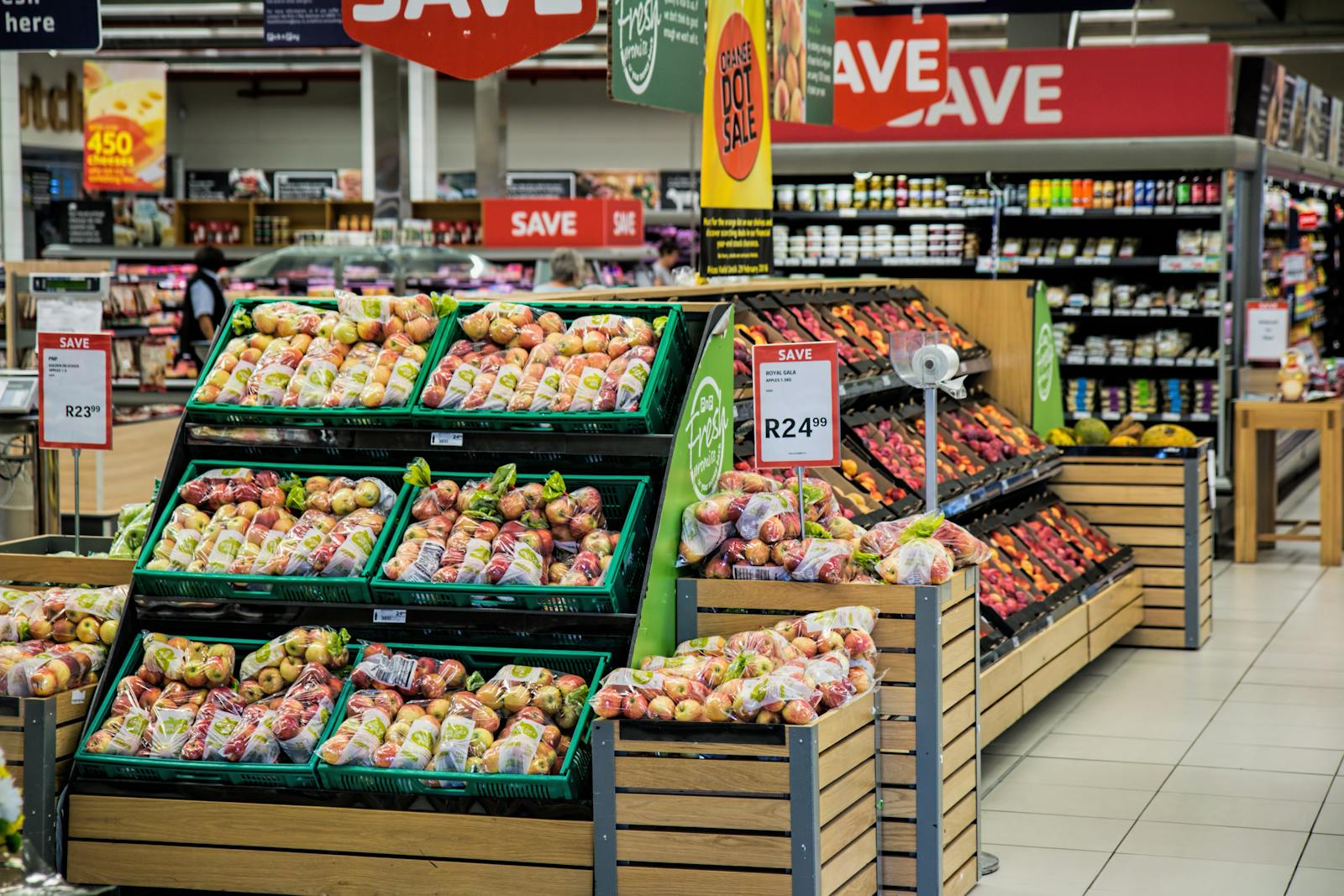
A supermarket is really six different pest environments under one roof.
Produce is a fruit fly and fungus gnat environment driven by rotting trim, overripe display product, and moist organic debris under coolers. Meat and deli are rodent and blowfly environments with raw-protein odor pulling pressure from outside the building envelope. The in-store bakery is a stored-product pest environment — Indian meal moth, flour beetles, cigarette beetles on specialty ingredient inventory. Back receiving is a rodent and bird environment with dock-door exposure to the surrounding commercial landscape. Front-end is an ant environment — sugar spills near registers, candy-aisle product, and customer-service coffee stations. A single pest program designed for 'a grocery store' misses all of it. The program has to match each department's distinct pressure profile.
ProTech services grocery operators across Indianapolis, Carmel, Fishers, Greenwood, Noblesville, Zionsville, Broad Ripple, Fountain Square, Mass Ave, and the surrounding metro — from independent neighborhood grocers and specialty/ethnic markets to natural-foods co-ops to full-size supermarket operations. Every program is built around the audit calendar grocery operators actually live with: corporate third-party pest audits from Ecosure, Steritech-equivalent, and retailer-specific vendor programs, plus Marion County Public Health Department food protection inspection, surrounding-county health department surveys, FDA Food Code 2022 compliance, and ISDH oversight layered on top.
We're a small, commercial-focused, owner-operated team on purpose. No residential side calls pulling our techs off schedule when your produce manager finds fruit flies over the banana display before a Friday corporate walk. The same crew knows your store layout, your department rotation cycles, which back-receiving doors actually close and which don't, and where last quarter's audit findings sat. That's the difference between a grocery pest program that passes audits and one that just shows up monthly.
Every grocery format across the Indianapolis metro.
Chain supermarkets, independent grocers, specialty markets, ethnic grocers, food co-ops, natural-foods stores, bulk-goods warehouses — we've built multi-department pest programs around the operating profile of each.
Multi-department operations with produce, meat, deli, bakery, grocery, and specialty sections. Coordinated pest programs that address each department distinctly while providing one consolidated corporate audit report.
Owner-operated single-location grocers where the same person ordering produce also handles pest program management. Streamlined programs with direct technician communication and no corporate-layer reporting overhead.
Asian, Latin, Middle Eastern, Indian, and European specialty grocers with ingredient profiles that draw different stored-product pest pressure — bulk rice, specialty flour, dried fish, spice inventory. Pheromone monitoring tuned for the specific pest spectrum these inventories attract.
Bulk-bin-heavy operations with open ingredient exposure and organic produce programs. Pheromone monitoring for bulk-bin stored-product pests, plus IPM compliant with organic certification constraints where they apply.
Member-owned grocery cooperatives with bulk-goods inventory, seasonal produce volume, and values-aligned product-choice constraints. IPM built to fit co-op operating philosophy plus documented pest management for health-dept compliance.
Bakery operations inside larger grocery stores with shared back-of-house and distinct stored-product pest profile. Coordinated programs that treat the bakery as its own pest environment while integrating with the store-wide plan.
Full-service meat and seafood departments with blowfly pressure, raw-protein odor attractant at exterior, and rodent-zone dock access. Specialized fly management plus exterior perimeter programs tuned for protein-operation pressure.
Dollar stores, small-footprint urban grocers, convenience-plus-grocery hybrids, and express supermarket formats. Right-sized programs that match the operating scale without generic contract pricing.
If it's a food-retail operation in the Indianapolis metro — produce markets, meat markets, cheese shops, international grocers, pop-up grocery formats, corporate cafeteria grocery — we build pest programs for it. Tell us what you stock and what audit cycle you're on.
Every pest service an Indianapolis-metro grocery store actually needs.
No residential side-programs pulling attention. Every hour of our week is commercial pest management — grocery, food service, and food-adjacent operators.
Commercial Bed Bug Treatment with Aprehend®
Grocery operations encounter bed bug hitchhiking in employee break rooms, locker areas, and upholstered office furniture more often than operators expect — especially at large-footprint stores with significant staff and shift-based workforces. We're one of the short list of Indy-metro operators professionally trained in Aprehend® — an EPA-registered biopesticide that clears bed bugs without a multi-day shutdown or heat treatment, so your store doesn't lose operating hours to remediation.
- ✓Low disruption
- ✓Kills adults & nymphs
- ✓Up to 3 months residual
- ✓No store closure required
German roach pressure at deli prep, bakery equipment, break rooms, and back-of-house wet zones. Gel baiting and IGR programs that resolve infestations without compromising retail product or food-contact surfaces.
View service →Fruit flies and fungus gnats at produce, blowflies at meat/seafood, drain flies at floral and back-of-house wash stations, house flies at receiving. Department-specific fly management, not store-wide aerosol.
View service →Exterior tamper-resistant bait station perimeter, interior mechanical-only monitoring through retail floor zones, dock-door exclusion on back receiving, and documented monitoring logs formatted for corporate audit review.
View service →Low-toxicity, threshold-based programs that meet FDA Food Code 2022, corporate retailer vendor standards, and organic-certification product-choice constraints. Sanitation-first methodology.
View service →Sugar-seeking ants at front-end registers, candy aisle, in-store coffee stations, and bakery department. Non-repellent bait programs — critical for pharaoh ants especially, where spraying causes colony budding.
View service →Indian meal moth, sawtoothed grain beetle, cigarette beetle, warehouse beetle at bulk-bin inventory, in-store bakery ingredient storage, specialty-grocer spice and grain inventory. Pheromone grid monitoring with trend analysis.
View service →Pre-corporate-audit walks, department-by-department sanitation consulting, structural exclusion, dock-seal audits, and floral/produce cooler condition reports. What prevents the Ecosure re-inspection.
View service →Active pest sighting before a corporate audit, customer complaint response, or grand reopening. Priority dispatch for grocery operators.
View service →The base service bundling recurring multi-department monitoring, reporting, and full pest-spectrum coverage under one agreement tuned for grocery operations.
View service →What Indianapolis grocery stores actually face.
Regional pest patterns across Marion, Hamilton, Hendricks, and Johnson county grocery accounts — what we see in audits, by department and pressure type.
Produce is a continuous fruit fly breeding environment — ethylene-ripening rooms, banana ripening zones, overripe trim, and standing water under display coolers. Treatment is source-identification (which specific cull bin, which cooler drain), FIFO rotation audit, and department-specific sanitation protocol. Fungus gnat pressure also hits grocery floral departments from saturated potting media.
Raw-protein odor from meat and seafood operations pulls blowfly pressure from outside the building envelope — especially at stores with exterior trim dumpsters. Interior ILT (Insect Light Trap) placement at meat/seafood back-of-house per AIB guidance, exterior source identification, and dock-door strip-curtain audit. Blowfly catches in interior ILTs are a common corporate audit focus.
Grocery stores are rodent-magnet environments — bulk food inventory, constant dock activity, and multi-door back-of-house access points. Urban grocery corridors in Indianapolis, Broad Ripple, Fountain Square, and Mass Ave carry elevated urban rat pressure. Exterior tamper-resistant bait station perimeter plus interior mechanical-only monitoring is the audit-required program.
Pheromone grid monitoring catches these at single-digit trap counts — before corporate audit or customer complaint. Specialty grocers and natural-foods stores with bulk-bin inventory have elevated pressure; pet food aisles are an underestimated source because bagged dry kibble hosts moth and beetle pressure the same as human-food grain.
Lower pressure than full-service restaurants but present wherever grocery stores operate warm equipment with food residue — deli slicer bases, bakery proofers, produce misting equipment, and employee break rooms. Gel baiting in motor housings and crack-and-crevice, placed within food-safety product-placement rules.
Sugar-seeking ants trail to specific retail pressure points — candy aisle pallet spills, front-end register sticky zones, in-store coffee station drip areas, bakery topping stations. Pharaoh ants require non-repellent bait; spraying causes colony budding across the store footprint and multiplies the problem.
Corporate audit concern at any grocery store — bird presence in or near food zones triggers findings. Common pressure at loading-dock canopies, cart-corral shelter structures, and vestibule entry zones. Program is exclusion first (netting, spikes, ledge modification), documented nest-material removal, and coordinated deterrent where structural exclusion is incomplete.
Drain-fly pressure concentrates in grocery-specific wet stations — especially floral department wash sinks and seafood prep drains. Enzymatic biofilm treatment plus scheduled drain-scrub protocol resolves permanently. Pressure elevates during humid July-August stretches.
Grocery pest pressure in the Indianapolis metro peaks twice a year — fly pressure (fruit, blow, drain, fungus gnat) compounds May through September as ambient temperatures accelerate breeding cycles and produce volume climbs, and rodent activity peaks October through February as populations move indoors toward food-zone access points. Stored-product pests stay year-round with trap-catch peaks June through September. Bird pressure is year-round but nest-building accelerates March through June. Service frequency is scoped to store format, audit calendar, and department pressure profile — not a generic 30-day cadence.
Documentation built for every audit framework in grocery.
Corporate retailer audits, third-party certification, health department inspections, and customer audits all reference the same pest-management evidence. Our documentation satisfies every framework simultaneously.
Marion County Public Health
Food protection inspections from Marion County Public Health Department reference Indiana's FDA Food Code 2022 adoption — with grocery stores evaluated on the same retail food establishment framework as restaurants, plus specific department-level requirements for deli, meat, bakery, and produce operations. Our documentation matches inspector evidence expectations.
Surrounding-County Health Depts
Hamilton, Hendricks, Johnson, Boone, Hancock, and Madison county health departments each run their own grocery retail inspection programs. Same core documentation — we adapt report format to whichever jurisdiction your store operates under, with consolidated reporting for multi-location grocery operators.
Corporate Third-Party Audits (Ecosure, Steritech)
National grocery chains and many regional operators carry Ecosure, Steritech-equivalent, or similar corporate third-party pest audit programs. We produce reports in the format each audit framework expects — with service record structure, findings documentation, and corrective-action trail formatted directly to audit scoring criteria.
Retailer-Specific Vendor Programs
Some retailers (Kroger, Whole Foods, Fresh Thyme, Meijer, independent regional chains) run their own vendor standard layered on top of third-party audit frameworks. We produce documentation that satisfies each specific retailer vendor program, with consolidated reporting for multi-banner retail operations.
FDA Food Code 2022
Indiana adopted the FDA Food Code 2022 framework, which covers retail grocery food establishments. Our IPM program, product choices, and service documentation are built around that standard — including pest-management requirements in Chapter 6 and the food-retail-specific provisions inspectors reference.
ISDH (State Level)
Indiana State Department of Health oversight layered above local health department inspections — especially relevant for multi-county grocery chains or stores serving specific vulnerable-population programs (WIC, SNAP-eligible retailer compliance). Documentation format scales across jurisdictions without duplicate record-keeping.
How we protect your grocery store.
On-Site Inspection
We walk every department — produce, meat, deli, seafood, bakery, floral, grocery, dairy, frozen, back receiving, dry storage, break rooms, exterior perimeter, dock aprons, rooftop HVAC. Map conducive conditions and pressure distinct to each department.
Multi-Department Pest Plan
Department-by-department IPM program design — pheromone grid in bakery and bulk-bins, ILT placement at meat/deli and back-of-house, fruit fly sanitation protocol for produce, exterior rodent station perimeter, bird exclusion for dock canopies. No generic contract.
Targeted Treatment
Low-toxicity, food-safety-compliant product placement — exterior rodenticide stations, interior mechanical-only monitoring, non-repellent ant baiting, pheromone traps, ILT maintenance, department-specific treatment. Scheduled around your operating hours and sanitation SOPs.
Audit-Ready Reporting
Digital service logs, department-level monitoring station maps, pheromone trend analysis, ILT catch trend analysis, corrective-action tracking, and audit-framework-specific report views. Pre-audit readiness walks available.
Grocery and supermarket pest control across the Indianapolis metro.
We service supermarkets, independent grocers, specialty markets, co-ops, and commercial grocery operations across Marion, Hamilton, Hendricks, Johnson, Boone, Hancock, Madison, Shelby, and Morgan counties.
- Pest control in Indianapolis→
- Carmel pest control→
- Fishers pest control→
- Noblesville→
- Greenwood pest control→
- Pest control in Westfield→
- Pest control in Zionsville→
- Pest control in Brownsburg→
- Avon, IN→
- Plainfield, IN→
- Franklin→
- Lawrence→
- Speedway pest control→
- Beech Grove pest control→
- Greenfield→
- Pest control in Mooresville→
- Pest control in Shelbyville→
- Anderson pest control→
- Whitestown pest control→
- Lebanon→
- Marion County
- Hamilton County
- Hendricks County
- Johnson County
- Boone County
- Hancock County
- Madison County
- Shelby County
- Morgan County
Grocery and supermarket pest questions.
Why does our produce department keep getting fruit flies even with daily cleaning? +
How do you handle rodent control in a grocery store without using rodenticide on the retail floor? +
We have an in-store bakery and keep finding small beetles in our flour. What should we do? +
Can you produce pest documentation that satisfies Ecosure, Steritech, and our corporate vendor requirements simultaneously? +
What's the right way to handle ants at our front-end registers and candy aisle? +
How do you handle bird pressure at our loading dock and cart corrals? +
We run multiple grocery store locations — can you service them all with consolidated reporting? +
Talk to a grocery pest specialist.
Tell us your store format, audit calendar, and current department pressure — we'll scope a plan, a price, and a realistic timeline. No high-pressure sales, no call center, no forced contract.
- ✓Free on-site multi-department grocery inspection
- ✓Department-level pest program design
- ✓Corporate audit-ready documentation
- ✓Consolidated reporting for multi-location grocery operators