Pest Control Built for Food Processing
USDA/FDA-compliant Integrated Pest Management, stored-product pest pheromone programs, pharaoh ant non-repellent baiting in sensitive environments, zero-tolerance bird and rodent exclusion. Documentation built for AIB, SQF, BRCGS, and FSMA preventive-controls requirements.
- ✓ USDA/FDA Compliance
- ✓ AIB · SQF · BRCGS Ready
- ✓ Aprehend® Professional
- ✓ Commercial Experts
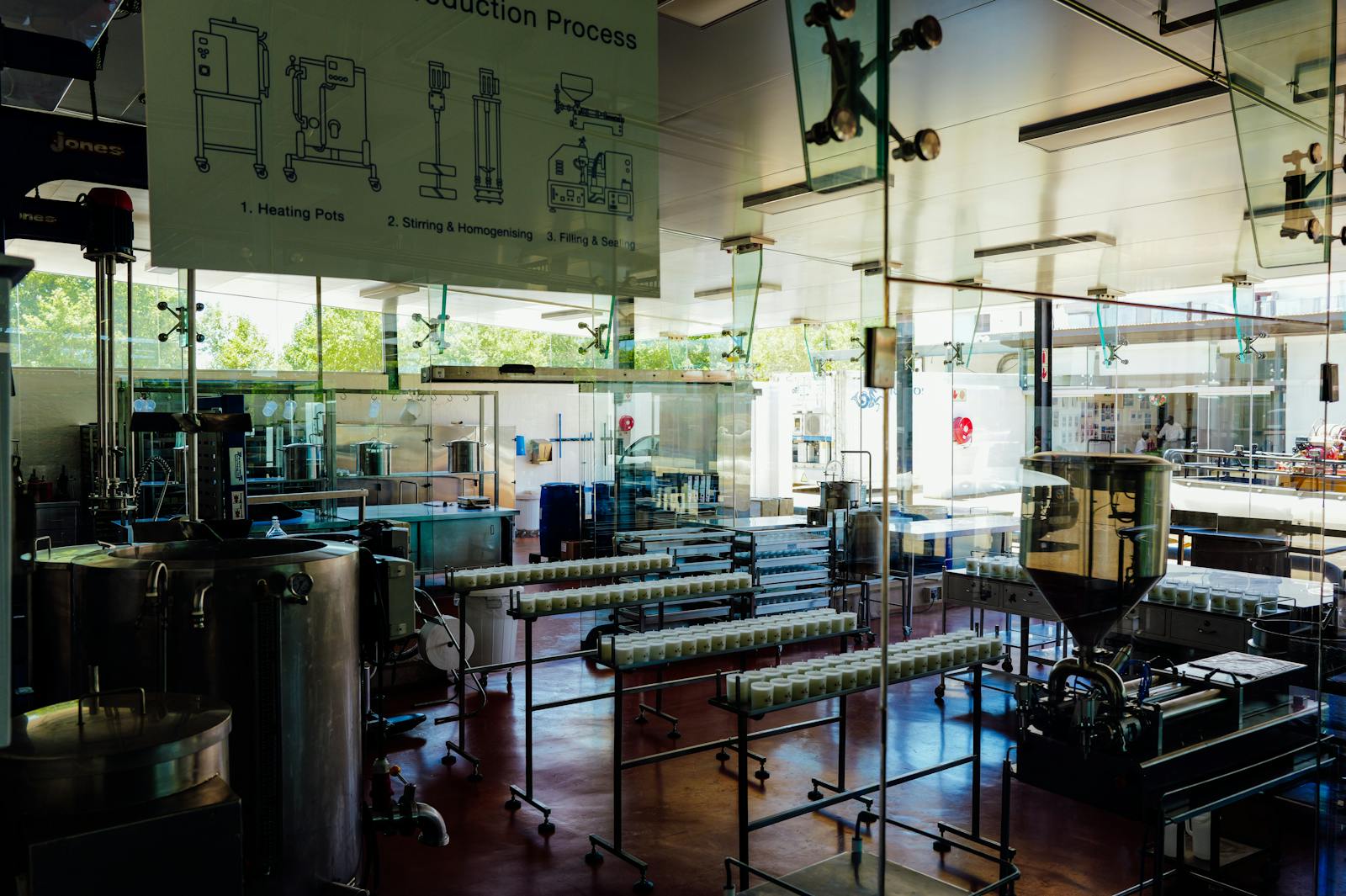
Food processing is the most regulated pest-management environment in the industry.
USDA FSIS inspection, FDA preventive controls rule under FSMA, third-party audits from AIB International, SQF, and BRCGS — every one of them treats pest management as a critical control point. A single rodent droppings finding in a production zone can shut a line down. Bird presence in a receiving area is zero-tolerance on every major audit framework. Pharaoh ant trailing in a sensitive environment (pharmaceutical-adjacent processing, infant-formula-adjacent production, any environment handling high-acid or low-pH product) triggers corrective-action cascades that take weeks to close out. The pest program isn't a vendor relationship — it's part of your food safety plan.
ProTech services food processing operators across Indianapolis, the US-31 corridor, the airport industrial corridor, Lebanon, Whitestown, Greenfield, and the surrounding metro — from small co-packer operations and private-label manufacturers to mid-size meat, dairy, beverage, and snack processors to multi-building industrial facilities running 24-hour production. Every program is built as a component of your food safety plan: IPM with documented thresholds, pheromone monitoring for stored-product pests, tamper-resistant rodent programs, exclusion-first structural approach, and audit-ready reporting that satisfies AIB, SQF, BRCGS, Primus, and FDA FSMA preventive-controls requirements simultaneously.
We're a small, commercial-focused, owner-operated team on purpose. No residential side calls pulling our techs off schedule during your pre-audit walk. The same crew knows your receiving dock flow, your raw-material inventory cycle, your sanitation SSOP schedule, and which zones get the deepest scrutiny on your next corporate audit. That's the difference between a pest program that gets you through the audit and one that gets cited.
Every food-processing format across the Indianapolis metro.
Meat and poultry, dairy, beverage, grain, snack, pet food, co-packing, private-label manufacturing, cold storage, packaging and distribution — we've built pest programs around the regulatory profile each one runs.
USDA FSIS continuous-inspection environment with zero-tolerance pest presence. IPM compliant with 9 CFR regulations, rodent exclusion on raw-material receiving, and coordinated programs with your HACCP plan.
Fluid-product environments with FDA oversight, CIP/SIP sanitation cycles, and specific fly-pressure profiles at filler and palletizer zones. IPM built around wet-processing-environment conducive conditions.
Flour mills, cornmeal production, specialty-grain processors, bakery ingredient co-packers. Stored-product pest monitoring at production scale — pheromone grids for Indian meal moth, sawtoothed grain beetle, confused flour beetle, Khapra beetle screening.
Chocolate, candy, nuts, dried fruit, and packaged snack manufacturing. Cigarette beetle and drugstore beetle pressure at specialty ingredient receiving, ant pressure at sugar and sweetener inventory, rodent exclusion at packaging lines.
Large-footprint cold storage with dock activity, ambient storage zones, and occasional ambient-temperature pockets that host pest pressure. Exterior-perimeter focused programs plus interior monitoring at dock and ambient transitions.
FDA-regulated animal food production with AAFCO compliance layered in. Stored-product pest monitoring for grain and protein-meal ingredients, rodent programs for bulk raw-material receiving.
Multi-client production environments where one facility runs multiple brands — each with its own audit requirements. Documentation built to satisfy every client audit simultaneously without duplicate service passes.
Repack operations, food warehousing, and distribution hubs moving finished food product through multi-SKU storage. Rodent exclusion, stored-product pest monitoring, and bird deterrence at loading docks.
If it's a food or food-contact processing facility in the Indianapolis metro — beverage canning, spice blending, sauce production, frozen food, ready-to-eat meal prep, nutraceutical processing, food-grade packaging manufacturing — we build pest programs for it. Tell us what you produce and what audit framework you carry.
Every pest service an Indianapolis-metro processor actually needs.
No residential side-programs pulling attention. Every hour of our week is commercial pest management — food processing, food service, and food-adjacent operators.
Commercial Bed Bug Treatment with Aprehend®
Bed bugs are an increasing concern in food-processing employee-area environments — break rooms, locker rooms, uniform storage, overnight rest areas in 24-hour production facilities. We're one of the short list of Indy-metro operators professionally trained in Aprehend® — an EPA-registered biopesticide that clears bed bugs without a multi-day shutdown, heat treatment, or any disruption to production. Critical for facilities that literally cannot shut down for remediation.
- ✓Low disruption
- ✓Kills adults & nymphs
- ✓Up to 3 months residual
- ✓Zero production disruption
German roach pressure at electrical panels, equipment motor housings, break-room appliances, and sanitation-prep zones. Gel baiting and IGR programs compliant with food-safety product-placement restrictions.
View service →Filth flies, house flies, fruit flies, phorid flies — diagnostic-first approach that traces each fly pressure to its specific source rather than aerosol knockdown. Insect Light Traps (ILTs) placed per AIB guidelines at receiving and processing zones.
View service →Exterior tamper-resistant bait station perimeter, interior mechanical trap monitoring, dock-door exclusion, and documented station logs that satisfy AIB, SQF, BRCGS, and FSMA audit requirements.
View service →Food-safety-plan integrated IPM with documented thresholds, corrective action triggers, and trend analysis. Built to function as a critical control point in your HACCP / food safety plan.
View service →Pharaoh ant non-repellent baiting — critical for sensitive food processing environments. Spraying pharaoh ants causes colony budding that can spread through an entire facility. We use the protocol USDA and FDA inspectors want to see.
View service →Full pheromone trap grid programs for Indian meal moth, sawtoothed grain beetle, confused flour beetle, cigarette beetle, drugstore beetle, warehouse beetle. Trend-analysis reporting tuned for AIB, SQF, and BRCGS review.
View service →Pre-audit walks, SSOP gap analysis, structural exclusion inspection, bird-pressure assessment at loading docks, and pre-certification readiness checks. What prevents audit findings before they happen.
View service →Pre-audit pest activity discovery, regulatory-inspection triggered corrective action, or production-line pest incident. Priority dispatch for food-processing operators.
View service →The base service bundling recurring interior/exterior monitoring, reporting, and full pest-spectrum coverage under one food-safety-plan-integrated agreement.
View service →What Indianapolis processing facilities actually face.
Regional pest patterns across Marion, Hamilton, Hendricks, Boone, and Johnson county processing accounts — what we see in audits, by pressure type and source.
Zero-tolerance pest on USDA, FDA, AIB, SQF, and BRCGS audits. Urban-fringe industrial corridors around the Indianapolis airport, US-31, and Lebanon/Whitestown distribution zones carry elevated rodent pressure driven by surrounding truck and rail activity. Program is exterior tamper-resistant bait station perimeter plus interior mechanical-only monitoring, with documented station map and corrective-action trail.
The #1 stored-product pressure in grain, bakery-ingredient, and dry-product processing. Pheromone grids give 3-4 week early warning. Zero-tolerance on AIB food-defense scoring; single-moth trap catches trigger corrective action in most SQF and BRCGS programs. Treatment is FIFO audit, receiving-inspection protocol, and IGR on equipment harborage.
One of the hardest pests to eliminate from a processing facility — and one of the most dangerous to misidentify. Pharaoh ants respond to repellent insecticides by colony budding — workers split off and form satellite colonies across the facility, multiplying the problem. Correct protocol is non-repellent gel bait (fipronil or indoxacarb) placed in worker trails. Common misdiagnosis and mistreatment call we get from operators who used the wrong product.
Outdoor filth fly pressure driven by raw-material receiving — especially meat, poultry, and produce processors. Interior ILT (Insect Light Trap) grids placed per AIB guidance, exterior fly-breeding-source identification, and dock-door exclusion with strip-curtain audit. Trend analysis on ILT catches is a core AIB and SQF documentation requirement.
Ride in on incoming raw material from distribution. Receiving-inspection protocol, pheromone monitoring with species-specific lures, and equipment-break-down sanitation are the combined fix. Warehouse beetle especially is an AIB focus species because of dermestid-family food-safety concerns.
Zero-tolerance on every major audit framework. Nesting, droppings, and bird presence in or near production zones trigger immediate corrective action. Program is exclusion first (netting, spikes, ledge modification), then harassment/deterrence, with documented removal of nesting material. Common pressure at Indianapolis airport-corridor and eastside industrial facilities.
Often misidentified as drain flies but breed in moist organic matter below the floor — cracked drain lines, leaking floor pits, sewer breaks. A phorid fly problem in a processing environment is usually a plumbing problem. We identify source so you know whether you're calling us or a plumber, and document the finding for your audit trail.
Lower pressure than commercial kitchens but present in any processing facility with warm equipment, food residue, and moisture. American cockroach pressure increases around floor drains and wet-processing lines; German roach pressure concentrates in employee break rooms and sanitation-prep zones. Gel bait placed within food-safety product-placement rules.
Food processing pest pressure in the Indianapolis metro peaks twice a year — stored-product pests climb May through October driven by incoming raw-material lifecycles and ambient warehouse temperatures, and rodent activity peaks October through February as populations move indoors from surrounding agricultural and industrial landscapes. Bird pressure is year-round but nest-building accelerates March through June. Fly pressure peaks May through September. Service frequency is scoped to your audit cycle, production volume, and SSOP program — not a generic 30-day cadence.
Documentation built for every audit framework in food processing.
USDA, FDA, AIB, SQF, BRCGS, Primus, and corporate third-party audits all reference pest management as a critical control point. Our documentation is built to satisfy every framework simultaneously.
USDA FSIS (Meat & Poultry)
Continuous-inspection USDA FSIS environments require pest management as part of HACCP/sanitation SSOP documentation. Rodent, bird, and insect presence are all actionable findings. Our IPM program documents station maps, service records, corrective actions, and trend analysis in the format FSIS inspectors review during IIC/NR activity.
FDA / FSMA Preventive Controls
FDA's FSMA preventive controls rule (21 CFR Part 117) treats pest management as a prerequisite program supporting your food safety plan. Our documentation integrates directly into your FSP as a PRP — hazard analysis review, control points, monitoring, corrective action, verification, and record-keeping all structured to FSMA standards.
AIB International Audits
AIB Consolidated Standards for Food Safety treat pest management as one of five core scoring categories. Our documentation matches AIB's scoring criteria directly — operational methods, maintenance, cleaning practices, integrated pest management, and adequacy of prerequisite programs. Indianapolis-metro processors have hit 900+ AIB scores on programs we've rebuilt.
SQF, BRCGS, Primus Audits
SQF Food Safety Code, BRCGS Global Standard for Food Safety, and Primus audits each carry their own pest-management documentation requirements. We produce reports tuned for each framework — with the structure, vocabulary, and evidence each specific auditor wants to see. Multi-framework facilities get consolidated reporting that satisfies every audit simultaneously.
Marion County & ISDH Oversight
Marion County Public Health Department and Indiana State Department of Health oversight layered above federal and third-party frameworks for retail-facing food processing and specific product categories. Our documentation scales across jurisdictions without duplicate record-keeping.
Corporate Third-Party & Customer Audits
Processors supplying national retail, foodservice distribution, and private-label brand owners typically carry customer-audit requirements on top of third-party certification. We produce audit-formatted reports for every major corporate program and can pre-walk your facility ahead of a customer audit for gap analysis.
How we protect your food processing facility.
On-Site Inspection
We walk the full facility — receiving, raw-material storage, processing line, packaging, finished-goods storage, shipping, sanitation, break areas, exterior perimeter, roof access, dock aprons. Map conducive conditions, zone-by-zone pressure, and structural exclusion gaps.
Food-Safety-Plan-Integrated IPM
IPM program designed as a prerequisite program under your food safety plan — documented thresholds, corrective action triggers, station maps, pheromone grid, ILT placement, audit-framework-specific reporting. No generic contract.
Targeted Treatment
Low-toxicity, food-safety-compliant product placement — exterior rodenticide bait stations, interior mechanical-only monitoring, pharaoh ant non-repellent baiting, pheromone traps, ILT maintenance, species-specific treatment for active findings. Scheduled around your production and SSOP calendar.
Audit-Ready Reporting
Digital service logs, station map with condition history, pheromone trend analysis, ILT catch trend analysis, corrective action tracking, and framework-specific audit-ready reports. Pre-audit readiness walks available.
Food processing pest control across the Indianapolis metro.
We service food processing, manufacturing, and industrial food operations across Marion, Hamilton, Hendricks, Johnson, Boone, Hancock, Madison, Shelby, and Morgan counties.
- Indianapolis→
- Carmel pest control→
- Fishers, IN→
- Pest control in Noblesville→
- Greenwood, IN→
- Westfield→
- Zionsville→
- Brownsburg→
- Avon, IN→
- Plainfield pest control→
- Pest control in Franklin→
- Pest control in Lawrence→
- Speedway, IN→
- Beech Grove pest control→
- Pest control in Greenfield→
- Mooresville→
- Shelbyville→
- Anderson, IN→
- Whitestown, IN→
- Pest control in Lebanon→
- Marion County
- Hamilton County
- Hendricks County
- Johnson County
- Boone County
- Hancock County
- Madison County
- Shelby County
- Morgan County
Food processing pest questions.
How do you handle pharaoh ants in a processing environment without making the problem worse? +
What's the right pheromone monitoring grid density for a large processing facility? +
Can you produce audit documentation that satisfies AIB, SQF, and BRCGS simultaneously? +
How do you handle bird pressure at our loading docks? +
What's the correct rodent program for a USDA-inspected processing facility? +
How fast can you respond if we find pest evidence during a pre-audit walk? +
We run a co-packer with multiple client brands — can one pest program serve every client audit? +
Talk to a food processing pest specialist.
Tell us your processing format, audit framework, and current pest program — we'll scope a plan, a price, and a realistic timeline. No high-pressure sales, no call center, no forced contract.
- ✓Free on-site processing facility inspection
- ✓Pre-audit readiness walk and gap analysis
- ✓USDA/FDA/AIB/SQF/BRCGS documentation
- ✓Priority response for pre-audit corrective action