Pest Control Built for Commercial Bakeries
Stored-product pest monitoring, pheromone-trap programs for Indian meal moth and grain beetles, non-repellent bait protocols for sugar-seeking ants, and rodent exclusion on your flour-storage dock. Service scheduled around your pre-dawn production window — not ours.
- ✓ AIB-Ready Documentation
- ✓ Pheromone Monitoring Programs
- ✓ Aprehend® Professional
- ✓ Commercial Experts
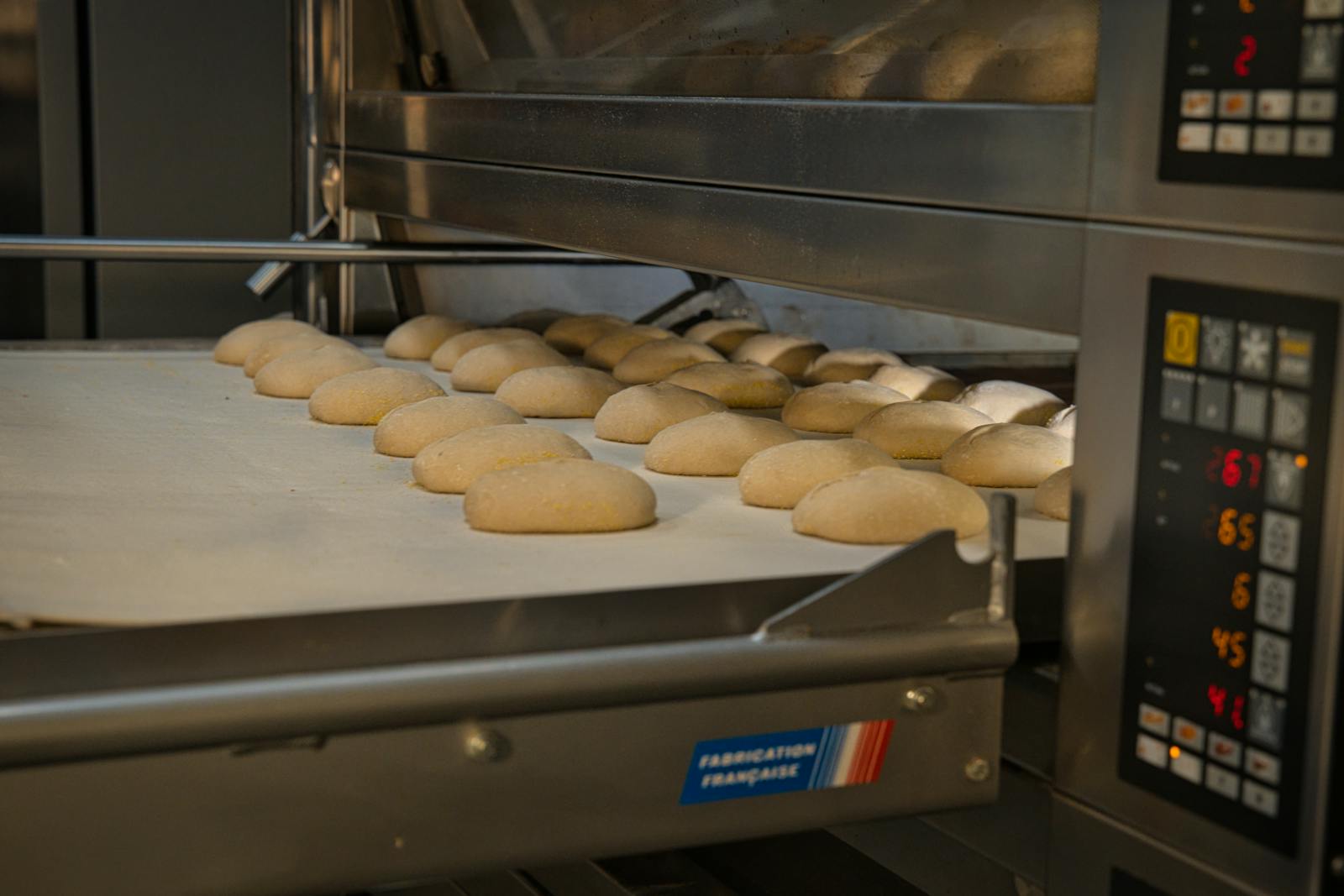
Bakeries face a pest profile almost no other food operation shares.
A commercial bakery runs on bulk dry-goods inventory — 50 lb flour bags on pallets, rolled oats in totes, sugar bins, nut inventory, dried fruit, specialty grains for rye and sourdough. That's the exact product profile stored-product pests are built to exploit. Indian meal moth larvae tunnel through bagged flour. Sawtoothed grain beetles move between shipments on incoming pallets. Cigarette beetles hit spice and nut inventory. Psocids (booklice) bloom in any elevated-humidity pocket against cardboard or paper packaging. These pests don't need a sanitation failure to arrive — they ride in with the delivery.
ProTech services bakery operators across Indianapolis, Carmel, Fishers, Noblesville, Zionsville, Greenwood, and the surrounding metro — from single-location artisan bakeries and bagel shops on Mass Ave and in Broad Ripple, to wholesale production lines supplying grocery and restaurant accounts, to industrial bakeries running 24-hour production. Every program is built around the inspection framework your operation actually lives with: Marion County Public Health Department food protection, surrounding-county health departments, FDA Food Code 2022, and for wholesale/industrial operators — AIB International third-party audit standards.
We're a small, commercial-focused, owner-operated team on purpose. No residential side calls pulling our techs off schedule. The same crew knows your flour storage room, your proof box rhythm, which pallet rotation your team actually follows, and where the pheromone traps need to sit for early-warning detection. That's the difference between a stored-product program that catches infestation at 2 moths per trap and one that catches it at 200.
Every bakery format across the Indianapolis metro.
Artisan bakeries, bagel shops, wholesale production lines, industrial baking, grocery in-store bakery departments, cafe-bakery hybrids, commissaries — we've built stored-product pest programs around all of them.
Small-batch operations with long fermentation cycles, open starter jars, and bulk flour inventory. Pheromone monitoring tuned for the low-thresholds these operators actually need to maintain.
Early-morning prep windows, high-volume dry-goods rotation, and boiler/proof-box moisture zones. Rodent exclusion on the dock and Indian meal moth programs for specialty flour stock.
Multi-pallet flour receiving, overnight production cycles, and distribution-route truck loading. AIB-ready documentation, pheromone trap grids, and receiving inspection protocols.
Continuous production environments where treatment windows don't exist. Low-toxicity IPM built around zero-interruption service — during shift changes, sanitation breaks, or scheduled downtime.
Departments inside larger supermarket operations where pest pressure crosses over from produce and deli. Coordinated programs that respect the store's broader corporate pest audit.
Retail-front operations with espresso bar, display case, and small-batch bake kitchen. Ant pressure on sugar stations, fruit flies on pastry display, and back-of-house stored-product monitoring.
Alternative flour inventory — almond, coconut, rice, tapioca — that pulls different stored-product pest profiles than wheat-based operations. Non-repellent bait programs that respect specialty-ingredient handling.
Shared production facilities with multiple bakery brands sharing mixer, oven, and storage equipment. Cross-tenant pest programs that protect each brand individually.
If it's a commercial bakery in the Indianapolis metro — cookie wholesalers, pie shops, donut production, tortilla factories, bagel commissaries, corporate-cafeteria in-house baking — we build pest programs for it. Tell us what you produce and what inspection or audit cycle you're on.
Every pest service an Indianapolis-metro bakery actually needs.
No residential side-programs pulling attention. Every hour of our week is commercial pest management — bakeries, food production, and food-adjacent operators.
Commercial Bed Bug Treatment with Aprehend®
Bed bugs aren't the first pressure that comes to mind in a bakery — but any operation with employee break rooms, uniform storage, or overnight-staff rest areas (common in 24-hour wholesale production) can encounter bed bug hitchhiking. We're one of the short list of Indy-metro operators professionally trained in Aprehend® — an EPA-registered biopesticide that clears bed bugs without a multi-day shutdown or heat treatment, meaning zero disruption to a production schedule that can't afford downtime.
- ✓Low disruption
- ✓Kills adults & nymphs
- ✓Up to 3 months residual
- ✓Zero production interruption
German roach pressure at proof boxes, mixer motor housings, and warm equipment bases. Gel baiting and IGR programs that resolve infestations without resistance buildup or product-contamination risk.
View service →Drain flies at wash stations and proof-box condensation points, fruit flies on specialty fruit inventory, and house flies on exterior dock access. Source-based diagnostics, not aerosol knockdown.
View service →Interior/exterior programs with tamper-resistant stations, flour-storage perimeter protection, loading-dock exclusion, and documented monitoring logs tuned for audit review.
View service →Low-toxicity, threshold-based programs that meet FDA Food Code 2022, AIB International audit standards, and corporate wholesale-buyer requirements. Sanitation-first methodology.
View service →Odorous house ants and pharaoh ants drawn to sugar bins, syrup stations, and honey inventory. Non-repellent bait programs that avoid the colony-splitting that residential-grade sprays cause.
View service →Indian meal moth, sawtoothed grain beetle, cigarette beetle, flour beetle, Psocids. The bakery-critical service — pheromone trap grids, FIFO audits, and packaging inspection that catches infestation at single-digit trap counts.
View service →Pre-audit walks, flour-bin rotation consulting, structural exclusion, dock-seal audits, and receiving-inspection protocol design. What prevents AIB citations before they happen.
View service →Active stored-product pest discovery before a wholesale-buyer audit, grocery-chain inspection, or grand opening. Priority dispatch for commercial bakery operators.
View service →The base service that bundles recurring interior/exterior monitoring, reporting, and the full pest spectrum under one agreement tuned for bakery operations.
View service →What Indianapolis commercial bakeries actually face.
Regional pest patterns across Marion, Hamilton, Hendricks, and Johnson county bakery accounts — what we see on service calls, by pressure type and source.
The #1 bakery pest. Larvae tunnel through bagged flour, whole grains, cornmeal, oats, and specialty-inventory dried fruit. Pheromone trap grids give 3-4 week early warning before visible infestation. Once established, the fix is FIFO audit, bag-to-container conversion, and IGR treatment of harborage — not fogging.
Rides in on inbound product from distributor warehouses. Adults are tiny (3mm) and easy to miss in a receiving inspection. Pheromone traps plus a receiving-inspection protocol catch incoming infestations before they spread into clean inventory. Common across wholesale bakery accounts servicing multiple distributors.
Hits everything the name doesn't suggest — cinnamon, paprika, cocoa powder, whole nutmeg, almonds, and specialty chocolate chips. Cigarette beetles are the reason a shipment of artisan chocolate can show live insects in the display case. Monitoring requires dedicated pheromone lures separate from meal moth traps.
Live and breed in flour residue accumulated under mixers, in bin seams, and in crack-and-crevice around production equipment. Cleaning alone doesn't solve them — the residue in equipment crevices is too deep for scrubbing. IGR treatment paired with equipment-break-down sanitation is the fix.
Thrive in any 70%+ humidity pocket against starch-based materials — cardboard boxes, paper labels, wall-to-floor joints behind storage racks. Not a structural threat but a rejection point on wholesale buyer audits. Fix is humidity control plus moisture-source elimination, not insecticide.
Sugar-seeking ants are a persistent pressure in any bakery with exposed sweetener inventory. Pharaoh ants especially require non-repellent bait — spraying fragments the colony and multiplies the problem. One of the most common cleanup calls we get from operators who used the wrong product.
Bulk dry-goods inventory is rodent heaven. One mouse can contaminate 5 lb of flour by scent alone, before any gnawing happens. Dock-door exclusion, pallet rotation, and interior tamper-resistant monitoring stations are non-negotiable — plus urban rat pressure is elevated in downtown, Mass Ave, and Fountain Square bakery corridors.
Lower pressure than restaurants but still present at any location with a drain line handling warm wet organic material. Proof-box drains especially — condensate plus flour residue is ideal drain-fly substrate. Enzymatic biofilm treatment plus scheduled drain-scrub protocol resolves permanently.
Bakery pest pressure in the Indianapolis metro peaks twice a year — stored-product pests climb May through October as ambient warehouse temperatures rise and incoming flour shipments carry heat-accelerated lifecycles, and rodent activity peaks October through February as populations move indoors toward food sources. Psocids flare during humid July-August stretches. We schedule service frequency around your production volume, inventory rotation cycle, and audit calendar — not a generic 30-day cadence.
Documentation built for the inspections and audits you actually get.
Health department, wholesale buyer, and AIB third-party audits all want the same three things — a pest logbook, service records with product/site detail, and a corrective-action trail. We produce all three on every visit.
Marion County Public Health
Food protection inspections from Marion County Public Health Department reference Indiana's adoption of the FDA Food Code 2022. Our service documentation matches the evidence inspectors want to see — pest activity log, service dates, products applied, and corrective-action notes tied to specific sightings.
Surrounding-County Health Depts
Hamilton, Hendricks, Johnson, Boone, Hancock, and Madison county health departments each run their own inspection programs. Same core documentation — we adapt report format to whichever jurisdiction your bakery operates under.
AIB International Audits
Wholesale and commercial production bakeries supplying grocery chains or national distributors generally carry AIB International audit requirements. We've built pest programs around AIB's scoring categories — operational methods and personnel practices, maintenance for food safety, cleaning practices, integrated pest management, adequacy of prerequisite and food-safety programs.
FDA Food Code 2022
Indiana adopted the FDA Food Code 2022 framework. Our IPM program, product choices, and service documentation are built around that standard — including the pest-management requirements in Chapter 6 that inspectors reference on citations for retail-facing bakeries.
Wholesale Buyer Requirements
Grocery-chain and foodservice-distributor buyers increasingly require their own vendor audit alongside AIB — with pest control documentation as a core review category. Multi-format reporting covers Kroger, Whole Foods, Fresh Thyme, and regional-distributor vendor requirements.
ISDH (State Level)
Indiana State Department of Health oversight layered above local health department inspections — relevant for multi-county wholesale operators and any bakery supplying schools, healthcare, or senior living facilities. Documentation format scales across jurisdictions.
How we protect your commercial bakery.
On-Site Inspection
We walk the full facility — production floor, flour storage, ingredient inventory, proof room, mixer/oven line, packaging, dock, exterior. Map conducive conditions and live pressure specific to your build-out and ingredient profile.
Custom Pest Plan
Pheromone trap grid layout, service frequency, and documentation format built around your bakery format, inventory rotation cycle, audit requirements, and existing pressure. No generic contract.
Targeted Treatment
Low-toxicity, IPM-compliant products and monitoring placed in specific harborage zones — mixer housings, flour bin seams, dock perimeters, wash stations. Scheduled around your production window, not ours.
Ongoing Monitoring & Reporting
Pheromone trap counts, digital service logs, stored-product-pest trend tracking, and audit-ready reports every visit. Live dashboard access for multi-unit wholesale operators.
Commercial bakery pest control across the Indianapolis metro.
We service artisan bakeries, wholesale production, industrial baking, and commercial bakery operations across Marion, Hamilton, Hendricks, Johnson, Boone, Hancock, Madison, Shelby, and Morgan counties.
- Indianapolis→
- Carmel, IN→
- Fishers, IN→
- Pest control in Noblesville→
- Greenwood pest control→
- Westfield→
- Zionsville→
- Brownsburg→
- Avon pest control→
- Plainfield, IN→
- Pest control in Franklin→
- Pest control in Lawrence→
- Speedway, IN→
- Beech Grove, IN→
- Pest control in Greenfield→
- Mooresville→
- Shelbyville→
- Anderson, IN→
- Whitestown, IN→
- Pest control in Lebanon→
- Marion County
- Hamilton County
- Hendricks County
- Johnson County
- Boone County
- Hancock County
- Madison County
- Shelby County
- Morgan County
Commercial bakery pest questions.
How do you catch Indian meal moth before it's visible in our flour inventory? +
We keep finding small beetles in our spice inventory — what are they? +
Can you service our bakery outside of production hours? +
What's the correct way to handle an ant problem near our sugar bins? +
Do you produce AIB-ready pest control documentation? +
Why do we keep getting booklice in our storage room? +
How do you handle rodent control without contamination risk to our flour inventory? +
Talk to a commercial bakery pest specialist.
Tell us your bakery format, inventory profile, and audit calendar — we'll scope a plan, a price, and a realistic timeline. No high-pressure sales, no call center, no forced contract.
- ✓Free on-site commercial bakery inspection
- ✓Pheromone monitoring grid design for stored-product pests
- ✓AIB-ready documentation for wholesale and production operators
- ✓Service scheduled around your production window