Pharaoh Ants in Indianapolis Healthcare Facilities: Why Spray Treatment Backfires
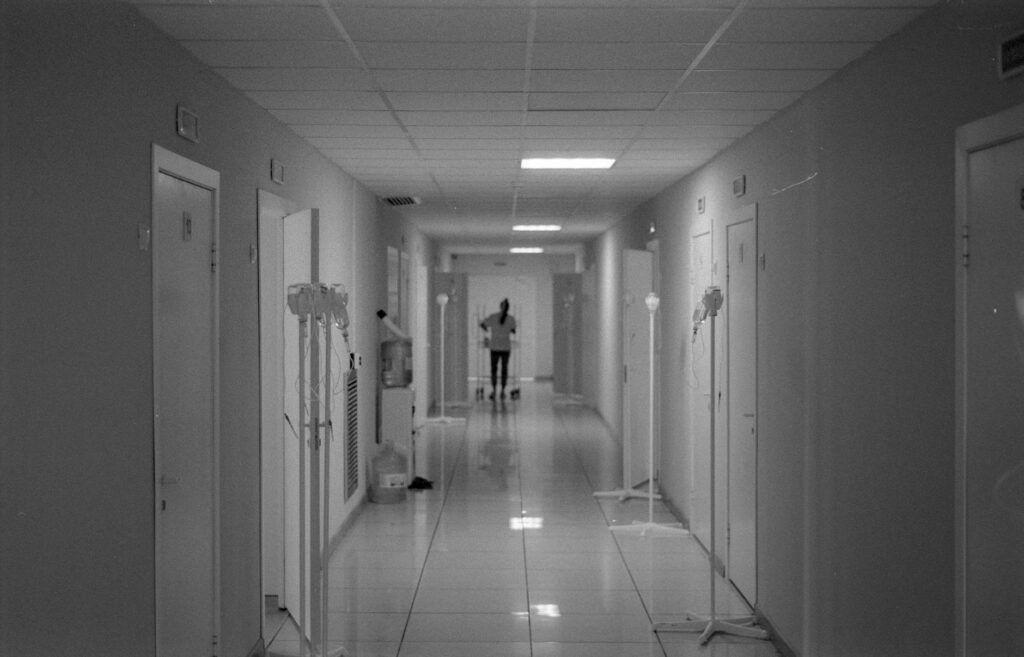
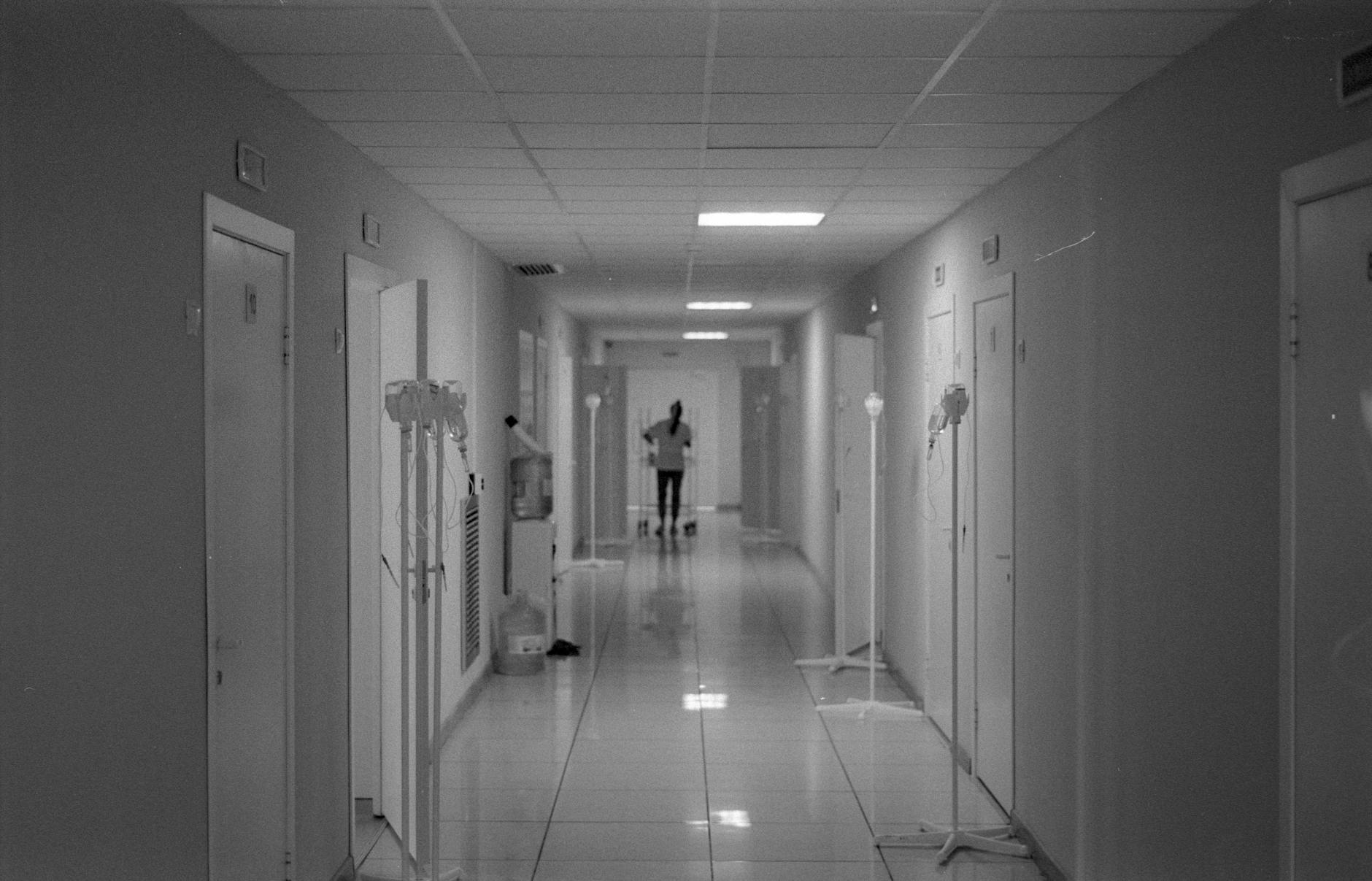
A facilities director at a 200-bed Indianapolis hospital walks the surgical wing on a Tuesday morning and finds three small amber ants on the inside lip of an IV pole tray. By Friday there are dozens trailing across a patient’s bedside table in a different unit on a different floor. Two weeks later — after the contracted pest control company has applied a perimeter spray on the building exterior and a residual treatment along baseboards in the affected rooms — the trail count has tripled, the ants are showing up in the dietary department, and an environmental services tech finds them inside a sealed box of saline IV bags. That’s not a worsening infestation. That’s budding, and it’s the single most important biological fact about pharaoh ants (Monomorium pharaonis) that almost no one outside of medical entomology understands.
Spray treatment on pharaoh ants in a healthcare facility doesn’t just fail. It actively multiplies the problem. Here’s the science, the documented patient-safety risks, the Joint Commission expectation around integrated pest management documentation, and the only treatment protocol that actually works in an occupied hospital environment.
Why Pharaoh Ants Are Uniquely Dangerous in Healthcare
Most ants in a commercial environment are a sanitation nuisance. Pharaoh ants in a healthcare environment are a documented patient-safety hazard with a peer-reviewed clinical literature stretching back fifty years. The species is small (about 2 mm), pale yellow to amber, and capable of squeezing through any opening larger than 0.5 mm — which means functionally any opening in any building. They prefer warm, humid environments above 80°F with stable food and water access. A modern hospital is, from a pharaoh ant’s perspective, a perfect habitat — climate-controlled year-round, with continuous food, water, and warm wall voids running between every department.
What separates pharaoh ants from every other ant species you might encounter in a commercial building is what they do once they’re inside the walls of a healthcare facility:
- Surgical site contamination. Pharaoh ants have been documented entering active surgical fields, post-operative wound dressings, and recovery-room patients. Multiple peer-reviewed case studies exist of ants inside packed gauze, surgical drapes, and even closed surgical wounds. The species is small enough to penetrate sterile packaging that has any micro-tear or seam gap.
- IV bag and IV line invasion. Pharaoh ants are repeatedly documented in clinical literature entering sealed IV bags through micro-perforations, climbing inside IV tubing, and being found in patient venous lines. Sweet glucose solutions are particularly attractive. This is not theoretical — there are published case reports from U.S. hospitals.
- Patient food intrusion. Hospital food service involves trays held in warming carts, patient-room nightstands, and tube-feed setups that can sit at room temperature for extended periods. Pharaoh ants exploit all of these. Patients on enteral feeding are particularly vulnerable.
- Mechanical transmission of pathogens. Pharaoh ants have been shown in published research to mechanically carry Staphylococcus aureus, Pseudomonas aeruginosa, Salmonella, Streptococcus, and Clostridium species on their bodies and in their digestive tracts. They travel from soiled-utility rooms, drains, and waste-handling areas directly into patient care zones — they are functioning as live vectors.
- Infant and immunocompromised patient risk. Neonatal intensive care units, oncology floors, transplant units, and dialysis centers serve populations whose immune systems cannot tolerate the bacterial load a pharaoh ant carries. A nuisance pest in a regular office becomes a sentinel-event pest in a hospital.
Joint Commission perspective. A live pharaoh ant in a sterile-processing area, an operating room, a clean-supply room, or any USP 797/800 compounding zone is a regulatory finding that can trigger immediate corrective-action requirements and, in worst cases, contributes to a Condition-Level deficiency on subsequent CMS survey. Documentation of an active integrated pest management (IPM) program and incident response is expected.
The Budding Problem: Why Spray Treatment Multiplies the Colony
Here’s the biology that breaks every traditional pest control assumption. A pharaoh ant colony is polygynous — it has multiple egg-laying queens, sometimes hundreds. The colony lives distributed across multiple satellite nests connected by trails through wall voids, plumbing chases, and conduit runs. There is no single nest you can find and treat. There is a network.
Now the critical part. When a pharaoh ant colony detects environmental stress — and a repellent pyrethroid spray is detected as massive environmental stress — the colony does not retreat or die. It buds. A subset of queens, brood, and workers physically separates from the original colony and walks away to establish a new satellite nest somewhere the stressor isn’t. The original colony also continues. Where you had one colony before treatment, you now have two. Spray a second time, you get four. Spray for four to eight weeks, you have a colony network that has spread laterally through the building’s wall infrastructure and is now showing up in departments that had no activity before treatment started.
This is not theoretical. It’s documented in the urban entomology literature going back to the 1970s and is the reason every textbook on commercial pest management treats pharaoh ant control as fundamentally different from every other ant species. The mechanism is so reliable that medical entomologists use it as a diagnostic test — if your spray program is making the ant problem worse over time, the ant is almost certainly Monomorium pharaonis.
Why Every Spray-Based Hospital Program Fails Over 4–8 Weeks
Walk into a healthcare facility with an active pharaoh ant problem and review the pest control logbook. The pattern is almost always the same. Week 1, ants reported in one or two zones — usually dietary, the cafeteria dish line, or a soiled-utility room near a break area. The provider applies a perimeter spray and a residual baseboard treatment in the affected rooms. Week 2, activity drops in the original zones. The provider documents “resolved” or “reduced.” Week 3, ants appear in two new zones the original report didn’t include. Week 4, four zones. Week 6, the dietary department is dealing with ants in food prep, the surgical wing is reporting them, and pharmacy is finding them in compounding areas. Week 8, the facility is in crisis.
The provider, looking at the logbook, sees an expanding problem and increases the treatment frequency or strength — which makes the budding response more aggressive. The provider didn’t do anything wrong by their training; they applied a standard ant control approach that works on most species. It doesn’t work on this one. It is in fact the worst possible approach for this one.
The other thing happening in the same logbook: between weeks 4 and 8, the staff complaint volume has flipped. EVS, dietary, and nursing have stopped trusting the pest control provider. The infection prevention nurse has started escalating to the facilities director. The facilities director is now in conversations with their VP of operations about switching providers — and depending on the size and acuity of the facility, those conversations sometimes include a Joint Commission consultant. The cost of getting this wrong in a hospital is not the pest service line item. It’s the audit risk and the patient-safety incident risk.
What Actually Works: The Non-Repellent Gel Bait Protocol
The only pharaoh ant treatment protocol with a published track record of resolving infestations in occupied healthcare buildings is non-repellent gel bait, applied in surgical placements at trail intersections and harborage entry points, using active ingredients in the indoxacarb or fipronil class. The mechanism is the inverse of the spray problem. Instead of stressing the colony into budding, the bait gets carried back into the colony and distributed through trophallaxis — the mouth-to-mouth food sharing pharaoh ants use to feed queens, larvae, and other workers.
How the bait reaches the queens.
Pharaoh ant workers don’t directly feed queens or brood. They forage, return to the nest with food in their crop, and regurgitate it to other workers and to the queens. Indoxacarb and fipronil-class actives at commercial bait concentrations are slow-acting by design — workers eat the bait, return to the nest, and feed it through trophallaxis to multiple queens, brood, and other workers before they themselves die. A single placement can propagate kill through the entire connected colony network because the network is, by definition, sharing food. The slow kill is the entire mechanism. Anything faster — anything that kills the worker before it returns to the nest — defeats the protocol.
Why this avoids budding.
Non-repellent baits are not detected as environmental stress. Workers eat them, share them, and the colony does not perceive a threat that triggers the budding response. The colony stays where it is, gets dosed through its own internal food economy, and collapses from within. Multiple queens die simultaneously because they’re all being fed from the same returning workers. Resolution is measurable in 2–4 weeks on most healthcare accounts, with monitoring continuing for 8–12 weeks to confirm satellite nests are also collapsing.
Bait palatability matters more than active ingredient.
Pharaoh ants are notoriously fickle eaters. A bait the colony rejects produces zero results no matter how lethal the active ingredient is. Healthcare-experienced applicators rotate between protein-based, sugar-based, and oil-based bait matrices to find the formulation the specific colony accepts. This is one of the most under-appreciated dimensions of commercial pharaoh ant control — the bait selection is iterative and based on visible consumption tracking, not a one-shot application.
Healthcare-Specific Application Restrictions
A commercial kitchen has restrictions. A commercial healthcare facility has substantially more restrictions, and the consequences for getting them wrong are higher. Any pest provider servicing a hospital, surgical center, dialysis clinic, infusion center, or nursing home in the Indianapolis metro needs to be operating with these restrictions as the default — not as a special accommodation.
- USP 797/800 sterile compounding zones. Pharmacy compounding rooms (sterile and hazardous drug) have strict environmental controls. No pesticide application of any form is permitted in these zones during operation. Service requires coordinated scheduling through pharmacy leadership, often during scheduled cleaning windows, and only physical exclusion or non-chemical intervention is appropriate inside the room itself. Bait placement happens at perimeter wall voids accessible from the exterior side of the compounding zone wall.
- Operating rooms and sterile-processing. No pesticide of any form during active or scheduled use. Service requires coordination with surgical services scheduling and EVS turnover protocols. Treatment is typically restricted to wall-void access points outside the surgical suite, with sterile-processing handled separately during deep-clean windows.
- Patient rooms and patient-care zones. Bait placement requires room-by-room coordination with charge nurses. No application around immunocompromised patients, no application during meal service, no application within reach of pediatric patients or patients with cognitive impairment. Discreet placements (under sinks, behind toilet panels, at wall-void entry points) coordinated with EVS scheduling.
- Infection control coordination. Most U.S. hospitals require the pest provider to attend or coordinate with infection control rounds, document each service through the facility’s IPM logbook, and provide on-demand SDS (formerly MSDS) sheets accessible to nursing and pharmacy staff. Many facilities require a written service plan signed by the infection prevention nurse before initial service.
- Dietary services and patient food handling. FDA Food Code 2022 plus Joint Commission expectations apply. Bait placement is concealed and away from food contact surfaces; broadcast residual treatments are prohibited in food prep, food storage, and patient meal assembly zones.
- No-spray policies. A growing number of healthcare systems in the Indianapolis metro have written no-spray policies for occupied patient care zones. A provider that defaults to spray on ant calls is not compatible with these accounts at all — pharaoh ants or otherwise.
Pharaoh Ants vs. Other Indianapolis Ant Species — ID and Treatment
One of the most common reasons healthcare facilities end up with a budding-spread pharaoh ant problem is mis-identification at the initial service call. Pharaoh ants are small and pale and superficially resemble several other species. Treating any of those other species with spray is fine. Treating pharaoh ants with spray is the worst possible response. ID matters.
| Species | Appearance | Behavior | Correct Treatment |
|---|---|---|---|
| Pharaoh ant (Monomorium pharaonis) | ~2 mm, amber to yellow, dark abdomen tip, 12-segment antennae with 3-segment club | Polygynous (multiple queens), buds when stressed, prefers warm humid interior, indoor year-round in heated buildings, attracted to greasy/sweet/protein foods | Non-repellent gel bait ONLY (indoxacarb or fipronil-class). NEVER spray. Multi-week monitoring with bait rotation. |
| Odorous house ant (Tapinoma sessile) | ~3 mm, dark brown to black, gives off rotten-coconut smell when crushed | Multi-queen but does not bud aggressively, indoor and outdoor, attracted to sweets | Gel bait works well, perimeter non-repellent residual is also effective. Spray is acceptable but bait is preferred. |
| Pavement ant (Tetramorium immigrans) | ~3 mm, dark brown, paler legs, parallel grooves on head and thorax | Single-queen, nests in pavement cracks and slab edges, indoor activity is foraging only | Granular bait at exterior, perimeter residual, or non-repellent gel bait inside. Spray is acceptable. |
| Carpenter ant (Camponotus pennsylvanicus) | ~6–13 mm, large, black, single-node petiole | Single-queen, nests in damaged wood, often associated with moisture intrusion | Locate and treat the nest directly with non-repellent dust or foam. Address moisture source. Spray is not the primary tool. |
| Acrobat ant (Crematogaster) | ~3 mm, heart-shaped abdomen held over the body when disturbed | Single-queen typically, nests in wood voids and insulation, often associated with prior carpenter ant or moisture damage | Locate the nest, treat with non-repellent product, repair moisture damage. |
| Thief ant (Solenopsis molesta) | ~1.5 mm, pale yellow, very small — often confused with pharaoh | Multi-queen, nests in wall voids, eats greasy foods, can co-occur with pharaoh ants in healthcare settings | Non-repellent gel bait, often protein-based. Treatment is similar to pharaoh but ID still matters for documentation. |
Joint Commission Expectations Around IPM Documentation
The Joint Commission does not publish a specific pharaoh-ant standard. What it does require, under the Environment of Care chapter, is that the facility manage pests through an integrated pest management approach with documented controls, documented incident response, and documented coordination between the pest service provider and infection prevention. In practice, that translates into a specific documentation expectation that any commercial healthcare pest provider should be producing as the default service deliverable.
- Written IPM service plan. A facility-specific document describing the scope of service, monitoring stations, treatment protocols, products approved for use in each zone type, and escalation procedures. Reviewed annually and signed by infection prevention.
- Service logbook with per-visit detail. Date, technician name, areas inspected, activity observed, products applied, application sites, quantities, target pests, and corrective action notes. Available for surveyor review on demand.
- SDS access for nursing and pharmacy staff. Safety data sheets for every product used in the facility, accessible 24/7 by clinical staff (typically through a binder in the EVS office or a digital portal accessible to charge nurses).
- Incident-response documentation. Specific written documentation for any patient-care-zone activity, including pharaoh ant findings in clinical areas. The documentation should include observation, communication to infection prevention, treatment decision, follow-up monitoring schedule, and resolution criteria.
- Annual program review. Year-over-year activity trending by zone, products used, modifications to the program, and recommendations for the upcoming year. Reviewed with the infection prevention nurse and the facility’s Environment of Care committee.
Communication Protocol: How a Healthcare-Aware Provider Coordinates Service
A residential pest provider treats a building. A commercial pest provider treats a building with documentation. A healthcare-aware commercial pest provider treats a building with documentation, after coordinating with three internal stakeholders, around constraints that change room-by-room and shift-by-shift. The coordination is the work. The treatment is what happens when coordination is in place.
Before service.
Communication starts before the technician arrives on-site. The facility manager confirms which zones are scheduled for service, the infection prevention nurse confirms any current isolation precautions or sensitive units that need to be excluded, and EVS confirms the room turnover and cleaning schedule so the technician’s window aligns with cleaning rather than against it. For pharmacy and surgical services, scheduling is coordinated through the department leads. Pre-service is also when the provider confirms which products will be used in which zones — pharmacy and infection prevention review and approve before any bait or other material enters those areas.
During service.
The technician follows facility access protocols (badge access, hand hygiene at every room entry, PPE per unit requirements, isolation precautions per door signage). Documentation happens in real time, not after the fact. Activity observations are noted immediately, photos are taken of placements (where camera policy permits), and any unexpected findings — a sealed IV bag with ant intrusion, ants in a food prep area, ants in a sterile supply zone — trigger an immediate communication to the infection prevention nurse and the facility manager rather than waiting for the end-of-service report.
After service.
Service concludes with a written report uploaded to the facility’s IPM logbook, a verbal handoff with EVS, and a flagged communication to infection prevention if anything was found in a patient care zone. Follow-up service is scheduled at the time of the visit, not at a later phone call. On accounts with active pharaoh ant pressure, follow-up is typically every 7–14 days during resolution, then stepped down to 30-day monitoring once the colony network is collapsing and bait consumption has dropped.

What To Ask Before You Hire a Healthcare Pest Provider
If your facility has active pharaoh ant pressure, or you’re switching providers because the current program has been making it worse, six questions separate a healthcare-capable provider from a commercial provider servicing your building on the side.
- How many healthcare accounts do you currently service in the Indianapolis metro? Looking for: specific account types (hospitals, surgical centers, dialysis, nursing homes), not generic “medical offices.” A provider with one or two genuine hospital accounts has the right protocols. A provider with zero is learning on your facility.
- What’s your treatment approach for pharaoh ants in occupied patient care zones? Correct answer: non-repellent gel bait, surgical placement, no broadcast residual in patient zones. Wrong answer: any version of “we’ll spray the perimeter” or “we’ll do a residual along the baseboards.”
- Do you coordinate service with infection prevention? Correct answer: yes, with specific examples of how that coordination happens at current healthcare accounts. Wrong answer: “we work with whoever is on-site when we arrive.”
- What documentation do you provide for Joint Commission and CMS surveys? Correct answer: written IPM plan, per-visit logbook with full detail, on-demand SDS access, incident-response documentation, annual program review. Wrong answer: a service sticker or a generic invoice.
- Are you commercial-only? ProTech is. Many of our peers are not. Providers serving both residential and commercial often default to residential methodology on commercial accounts — which on a healthcare facility means perimeter spray, which on pharaoh ants is the worst possible response.
- Do you sub out healthcare accounts to other companies? We don’t. The technician at your facility next month is the same technician who started the account, with the same training, the same documentation history, and the same direct accountability to facility management. Owner Stephen Hill is reachable directly when something needs to escalate.
Next Steps — If Pharaoh Ants Are Already in Your Facility
If your Indianapolis-metro hospital, surgical center, dialysis clinic, infusion center, or nursing home has active pharaoh ant activity right now, the priority is two-fold: stop any ongoing repellent treatment that is driving the budding response, and get a non-repellent gel bait protocol onto the building before the colony network expands further. The first inspection establishes which species you’re actually dealing with (ID matters), which zones are currently active, and which zones are at adjacent-wall-void risk — because pharaoh ants travel through the building’s wall infrastructure, the next affected department is almost always the one sharing a wall with the current one.
ProTech is commercial-only across Marion plus the surrounding eight counties. We service hospitals, surgical centers, dialysis facilities, nursing homes, and assisted living accounts directly — no call center, no subcontracted technicians, same tech every visit. Request a healthcare pest control consultation or see our full healthcare and medical facility services page for how we run hospital and clinic accounts. For senior living and skilled nursing specifically, see our nursing home pest control page.
Active pharaoh ant problem in a hospital, clinic, or nursing home?
If a current pest program is making the ant problem worse, that’s diagnostic — and we should talk before the next scheduled service. Reach Stephen Hill directly during business hours. No call center, no dispatcher, no script. Commercial-only across Marion and eight surrounding counties.