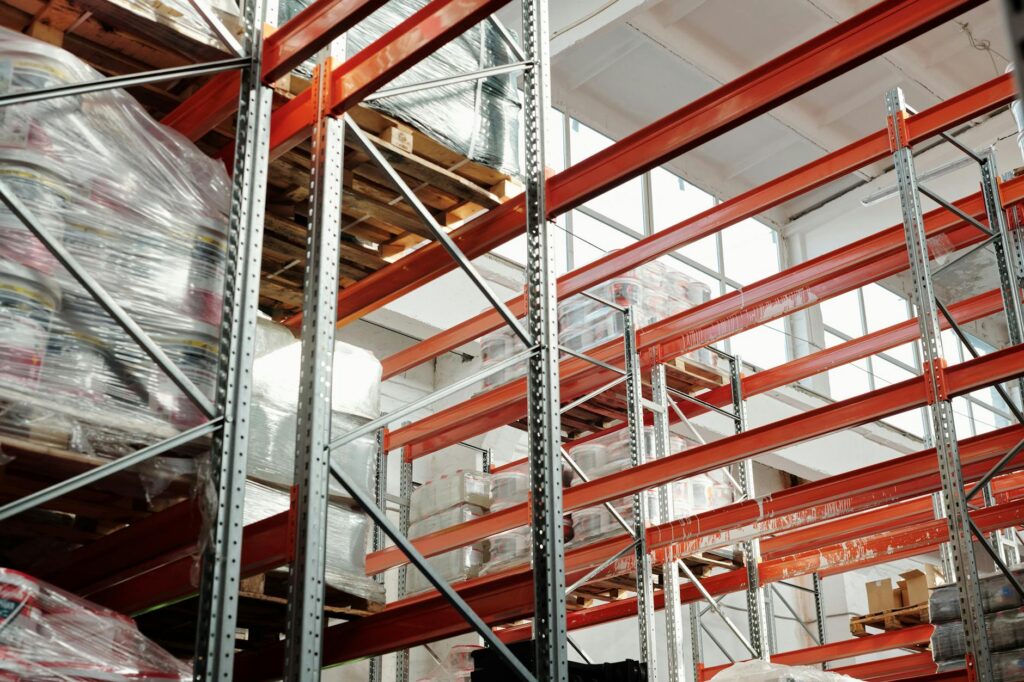
Warehouse Rodent Exclusion in Indianapolis: Why Bait Stations Aren’t Enough
A warehouse manager on Indy’s west side called us in February after his third-party AIB inspection downgraded his facility from Superior to Improvement Needed — not because the auditor saw a rodent, but because the auditor opened the IPM logbook and found six months of exterior bait-station service tickets and nothing else. No interior monitoring map. No exclusion log. No trend analysis. No corrective-action documentation. The pest provider had been doing exactly what the contract said: monthly bait-station refills around the perimeter. The auditor’s note read: “Program does not demonstrate Integrated Pest Management. Reliance on rodenticide as primary control mechanism is non-compliant with current AIB Consolidated Standards.”
That’s the gap most Indianapolis distribution centers don’t realize they have until an audit, a customer-led inspection, or — worst case — a contamination event surfaces it. Bait stations are part of a rodent program. They are not the program. For warehouse and 3PL operators in the Indy metro, the pest issue that pulls scorecards and contracts is almost never visible activity. It’s missing exclusion and missing documentation. Here’s how the 4-pillar IPM model actually works in a warehouse environment, what auditors expect to see in your binder, and why exclusion-first beats bait-first on 12-month ROI.
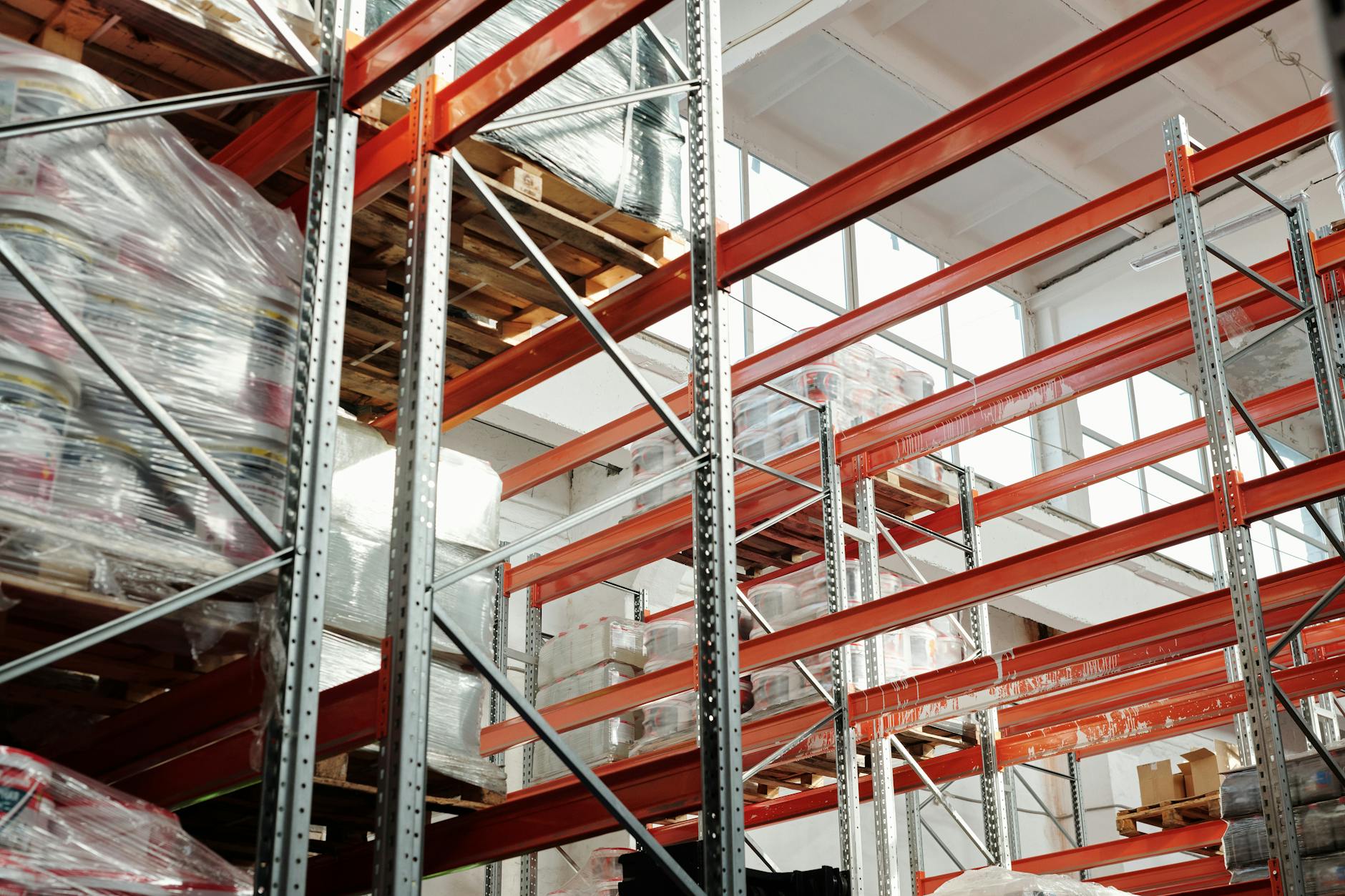
Why Indianapolis Warehouses Are Rodent Magnets
Distribution centers concentrate every variable a rodent population needs. Warmth, water, food, harborage, and shelter — all under one roof, often across several hundred thousand square feet, with constant human traffic that masks early activity. The Indianapolis metro adds a few region-specific accelerants:
- Dock-door cycling. A regional DC running 80–200 truck cycles per shift opens its envelope every 3–6 minutes. Each opening is a 10-by-10-foot hole in the building. Even with weather seals in spec, rodents move with carts, pallets, and shrink-wrap returns. Once inside, they don’t go back out.
- Palletized food and consumer goods. Cardboard, paper, glue, packaged dry goods, pet food, snack manufacturing inputs, beverage syrups, plastic film — most of it is rodent food, rodent harborage, or both. A pallet of cereal that’s been racked at position 4-12-C for nine months is a nesting site.
- Semi-permanent dust harborage. The high racks and roof joists collect a quarter inch of dust per quarter. That dust is undisturbed cover that lets rodents move through a facility without ever crossing an open floor. Dust also obscures rub marks and droppings — the early-warning evidence inspectors look for.
- Square-footage challenge. A 400,000-sq-ft DC can’t be visually inspected end-to-end in a service window. Activity in row 47 doesn’t get noticed for weeks. By the time it does, the breeding population is established.
- Employee-shift turnover. Three shifts, contract labor, peak-season hires — rodent sightings get reported informally, lost between shifts, or never reported at all. Without a formal sighting log integrated into the IPM program, intelligence is gone.
- Indianapolis rail-corridor pressure. Older industrial parks along the rail lines (West Indianapolis, the Northwestern corridor, Beech Grove) carry heavy Norway rat exterior pressure. Newer build-to-suit DCs on the Plainfield and Whiteland greenfields tend toward house mouse pressure from agricultural surrounds. The species you’re dealing with affects everything from station spacing to exclusion priorities.
Reality check. A clean facility is not a rodent-free facility. Mice and rats nest inside your inventory, not in the cracks of the building. Pallets, returned product, stretch-wrap rolls, and forgotten seasonal goods at the back of the rack are all primary harborage. Sanitation matters, but sanitation alone won’t solve a warehouse infestation if the building envelope is leaking rodents.
Why Exterior Bait Stations Alone Don’t Solve Interior Infestations
Tamper-resistant exterior bait stations placed on a 50-100 foot grid around your perimeter do exactly one thing well: they intercept and kill rodents that are outside the building, approaching the building. They reduce exterior population pressure. They are valuable. They are also wildly insufficient on their own — and any auditor will tell you the same.
Here’s the failure mode in plain terms. Exterior stations work on a foraging-and-return model. A rodent leaves harborage, encounters a station, feeds, returns to harborage, and dies hours-to-days later. That model assumes the rodent came from outside. Once a population has established inside your facility — nesting in the racks, breeding in equipment voids, drawing food from your inventory and water from condensate lines — those rodents have no reason to leave. They never visit your exterior stations. The population multiplies indoors while your service tickets show steady (or even declining) bait consumption at the perimeter.
Three things compound the problem:
- Bait-station consumption is a misleading metric. Stations consumed = exterior pressure intercepted, not interior population resolved. Rising consumption can mean exterior pressure is up. Falling consumption can mean exterior pressure is down — or that interior populations have stabilized indoors and stopped foraging out. Your service ticket can’t tell you which.
- Rodenticide-only programs select for bait-shy genotypes. Warfarin and second-generation anticoagulant resistance is well-documented in commercial Norway rat populations. AIB Consolidated Standards and SQF Code Edition 9 both flag rodenticide-as-primary-control as a non-conformance precisely because it doesn’t work long-term and it doesn’t address root cause.
- Interior breeding populations need interior controls. Multi-catch curiosity traps on a 30-50 foot interior grid, glue-board monitoring in target zones, and exclusion at penetration points are the actual interior tools. Bait stations alone — even when scaled up indoors with tamper-resistant boxes — are still a foraging-model tool applied to a non-foraging problem.
The 4-Pillar IPM Model: Exclusion, Sanitation, Monitoring, Chemical
Integrated Pest Management for warehouses and distribution centers is built on four pillars in priority order. AIB, SQF, BRC, and most customer-led audit programs work from the same framework. The order matters: exclusion is the actual fix, chemical is the backstop — not the other way around.
Pillar 1 — Exclusion (the actual fix).
Exclusion means physically denying rodents access to the building and to harborage inside the building. It is the only pillar that addresses root cause. Exclusion measures pay for themselves on a 6-18 month horizon because they reduce ongoing service intensity and rodenticide consumption. Targets include dock-leveler gaps, dock-door weather seals, HVAC and conduit penetrations, cinder-block weep holes, roof-line transitions, employee-door undercuts, and any unsealed pipe chase or wall void. (Full target list in the next section.) Exclusion is the highest-leverage spend in any rodent program and is consistently the most underfunded line item in warehouse pest budgets.
Pillar 2 — Sanitation.
Sanitation in a warehouse context is not floor mopping. It’s removing harborage and removing food access. Specific elements: 18-inch white-zone clearance from all walls, no pallets stored against walls, FIFO rotation on dry goods so racks don’t become long-term harborage, prompt removal of damaged-product spillage, dock-pit cleanliness (a dock pit with grain dust and cardboard scrap is a feeder station), trash compaction with sealed lids, and outdoor-area weed/vegetation control to a 24-inch dry-zone perimeter. Sanitation is what makes exclusion stick and what makes monitoring readable.
Pillar 3 — Monitoring.
Monitoring is the pillar that tells you whether the other three are working. A defensible warehouse monitoring program includes: a numbered station map (every device geolocated), exterior tamper-resistant bait stations at building perimeter, interior multi-catch (mechanical, no-rodenticide) traps on a 30-50 foot grid along walls and key zones, glue-board sentinels in office and break areas, and a trend log that converts monthly data into rolling charts so you can see population pressure over time. Trend reversal — three months of rising interior catches — is the early signal that your sanitation or exclusion has slipped.
Pillar 4 — Chemical control (bait, snap).
Chemical is the last pillar, not the first. In warehouse environments, chemical control means tamper-resistant exterior bait stations (rodenticide), interior snap traps in protected boxes when active interior populations are present, and tracking-powder applications in defined void spaces in rare cases. Rodenticide use indoors should be limited and documented; AIB and SQF both prefer mechanical controls (snap, multi-catch) inside the food-handling envelope. Chemical is a tool — not a strategy.
Mouse vs. Rat in Indianapolis Warehouses
The two species you’ll deal with in Indy metro warehouses behave differently, enter differently, nest differently, and require different exclusion priorities. Misidentifying which one you have is the most common reason rodent programs underperform.
Norway rat (Rattus norvegicus) — the older industrial Indy pattern.
Norway rats dominate the older industrial corridors near rail lines: West Indianapolis along the CSX corridor, the Northwestern industrial belt, parts of Beech Grove, and older infill warehouses inside I-465. They burrow exterior, prefer ground-level entry, and need a dime-sized opening (about 1/2 inch) to enter. They’re cautious of new objects (neophobic) — meaning a freshly placed snap trap may be ignored for 5-10 days. They drink openly and need water access daily. In warehouses, Norway rats nest at ground level: pallet bottoms, baseboard voids, dock-pit corners, electrical-room floor penetrations.
House mouse (Mus musculus) — the newer DC pattern.
House mice dominate newer build-to-suit DCs on the Plainfield, Whiteland, Greenwood, and Lebanon greenfields. They enter through gaps as small as 1/4 inch (the diameter of a pencil) — meaning dock-leveler edges, weather-seal failures, and conduit penetrations are all entry points. They get their water from food and condensation, so a dry warehouse doesn’t deter them. They’re not neophobic — they investigate new objects readily, which makes monitoring easier. Mice nest vertically: in roof-line transitions, top-of-rack accumulation zones, drop-ceiling cavities, and inside palletized inventory. A mouse population can be entirely above your knee level and you’ll never see one on the floor.
Practical implication. A Plainfield DC with a house mouse problem and a service plan built around exterior ground-level Norway rat stations is misdiagnosed. The bait stations are catching nothing because the mice are entering through 1/4-inch gaps at the dock-door track 14 feet up and nesting in the rack tops. You need vertical exclusion, dock-leveler brush seals, and interior multi-catch monitoring on a tighter grid — not more perimeter rodenticide.
Real Exclusion Targets in an Indianapolis Warehouse
Exclusion is the highest-ROI pillar and the one with the most concrete target list. Below are the entry points we find on actual Indy-metro warehouse audits, in approximate order of frequency, with the typical gap size and the standard exclusion fix. These are the items that show up in every exclusion log we write.
| Entry Point | Typical Gap | Species at Risk | Standard Exclusion Fix |
|---|---|---|---|
| Dock-leveler side gaps | 1/4″ – 1″ | House mouse, juvenile rat | Foam-filled brush seals or dock-leveler side curtains; replace worn weather pads |
| Dock-door bottom seal (worn / rolled) | 1/2″ – 2″ | Norway rat, house mouse | Replace bottom astragal; reset threshold; bristle sweep where threshold is uneven |
| Overhead door track gaps (top corners) | 1/4″ – 1/2″ | House mouse | Track-corner foam inserts; vertical brush seals |
| HVAC / refrigerant line penetrations | 1/4″ – 2″ | Both | Stainless steel wool packed into gap, sealed with NSF-listed silicone or expansion foam over the wool |
| Conduit & cable-tray penetrations through walls | 1/4″ – 3″ | Both | Fire-rated putty or escutcheon plates with copper-mesh fill behind; inspect both interior and exterior face |
| Cinder-block weep holes | 1/2″ x 2″ | House mouse | Stainless mesh weep covers (allow water out, block rodents in) — never solid plug, breaks the wall drainage system |
| Roof-line / parapet transitions | 1/2″ – 2″ | House mouse | Sheet-metal flashing with mesh-backed seal; inspect post-storm — wind lifts seals annually |
| Roof-mounted RTU (rooftop unit) curbs | 1/4″ – 1″ | Both | Curb gasketing inspection; foam where curb-to-deck has separated |
| Employee-door undercuts | 3/8″ – 1″ | Both | Door sweep with bristle bottom; threshold replacement if floor is uneven |
| Floor-drain grates with broken bars | 1/2″+ | Norway rat (sewer line) | Replace grate; sewer-line one-way rodent valve if Norway rat is climbing the line |
| Pipe chases not sealed at floor or ceiling | Varies | Both | Fire-rated putty or mineral-wool packing; verify both ends of chase |
| Trash compactor / dumpster pad gaps | 1″ – 6″ | Both | Threshold seal; pad cleanliness; compactor gasket replacement |
Two things to flag from this list. First: 1/4 inch is the threshold. Any gap that exceeds the diameter of a #2 pencil is a house-mouse entry point. Walking your facility once a quarter with a quarter-inch gauge in hand is the highest-leverage 90 minutes you’ll spend on rodent management. Second: roof-line and rooftop unit (RTU) transitions are the most missed category. Most facility teams never inspect them because they require a roof-access lift and a ladder, and most pest providers bill exterior service from the parking lot. Roof-line pressure is a primary vector for house mouse populations in newer Indy DCs and is almost always undocumented.

What Auditors Actually Check (AIB, SQF, BRC, Customer Audits)
Whether you’re audited under AIB Consolidated Standards, SQF Code Edition 9, BRCGS Global Standard for Storage and Distribution, or one of the major customer-led programs (Walmart, Target, Costco, big-box retailer audits), the rodent-program documentation requirements converge on the same six artifacts. If your IPM binder doesn’t have these, the auditor will write the finding regardless of how clean the facility looks.
- Numbered, current rodent monitoring map. Every device — exterior stations, interior multi-catch traps, glue boards, snap traps — geolocated on a facility floorplan with a unique device number. Map dated and updated when devices move. Auditors will physically verify three to five devices against the map.
- IPM Standard Operating Procedure (SOP). Written program document covering scope, responsibilities, service frequency, escalation thresholds, and corrective-action triggers. Signed by management. Reviewed annually. This is the single most commonly missing document on Indy-metro audit failures.
- Trend analysis log. Monthly capture and consumption data charted across rolling 12 months. The auditor wants to see the trend, not a stack of service tickets. A spike in interior catches without a documented response is a major non-conformance.
- Exclusion documentation. A facility-wide exclusion log: where gaps were identified, when, by whom, what was done, and verification photos. New construction, post-storm inspections, and quarterly walkthroughs all generate exclusion entries.
- Service ticket detail. Each ticket should show: date, time, technician name and license, devices serviced (by number, not just count), activity observed, products applied (with EPA reg numbers and locations), corrective recommendations.
- Corrective action records. When activity is found or a recommendation is made, the closeout record showing what the facility did about it. Open recommendations older than 90 days are a finding.
The unwritten rule. Auditors don’t expect zero rodent activity — they expect a functioning system that detects and responds to activity. A facility with three documented interior catches, a written corrective-action plan, and verified exclusion follow-through scores higher than a facility with zero documented activity and a thin paper trail. The system is the standard.
Cost Comparison: Exclusion-First vs. Bait-First Over 12 Months
The pushback on exclusion is always the upfront cost. A typical mid-size Indy DC (150,000-300,000 sq ft) with no prior exclusion work will quote out somewhere in the $4,500-$12,000 range for a comprehensive exterior exclusion package — dock-door seals replaced, conduit penetrations sealed, cinder-block weep covers installed, roof-line transitions verified, employee-door sweeps replaced. That’s a real check to write. The math, however, runs in exclusion’s favor on a 12-month horizon. Here’s a simplified comparison for a representative facility:
| Cost Category | Bait-First Program (12 mo) | Exclusion-First Program (12 mo) |
|---|---|---|
| Initial exclusion (one-time) | $0 | $6,800 |
| Monthly recurring service (12 × monthly rate) | $5,400 | $4,800 |
| Emergency / interior-population callouts | $2,800 (2-3 events) | $600 (0-1 events) |
| Audit corrective-action remediation | $1,500 (post-finding scramble) | $0 (program already meets standard) |
| Rodenticide consumption | High | Low |
| Risk of contamination / customer chargeback | Material | Significantly reduced |
| Year 1 total (cash) | $9,700 | $12,200 |
| Year 2+ recurring (no exclusion repeat) | $9,700+ ongoing | $5,400 ongoing |
Year 1 cash favors bait-first by roughly $2,500. Year 2 forward favors exclusion-first by roughly $4,000-$5,000 annually — and that’s before you count the audit-finding remediation cost (which is often the single largest unbudgeted expense), customer chargeback risk on a contamination event, or the operational cost of an emergency interior infestation that pulls inventory off the rack for cleanup. Most CFOs we present this to recognize the pattern within five minutes: exclusion is a capital expense with a 12-18 month payback, and bait-first programs are an operating-expense annuity that never resolves the underlying issue.
What a Working Indianapolis Warehouse IPM Program Looks Like
Putting it all together, here’s what a defensible, audit-ready warehouse pest program looks like across the Indianapolis metro — Marion, Hamilton, Hendricks, Hancock, Boone, Johnson, Madison, Morgan, and Shelby counties:
- Initial site assessment. Walk the building envelope inside and out, ground level and roof. Document every penetration, dock-leveler condition, weather-seal status, weep hole, and roof-line transition. Build the exclusion target list with verification photos.
- Exclusion remediation. Address the target list in priority order. Dock doors and weep holes first (highest entry frequency). Roof-line and RTU curbs next. Interior wall penetrations last. Document each fix with before/after photos in the exclusion log.
- Device deployment. Numbered, mapped exterior tamper-resistant bait stations on building perimeter at 50-100 foot spacing. Interior multi-catch (no rodenticide) traps on a 30-50 foot grid along walls. Glue-board sentinels in office, break areas, and dry-storage transitions. All devices on the master map.
- Monthly service cadence. Same technician every visit (continuity matters — your tech learns your facility). Activity recorded by device. Trends charted. Exclusion follow-up checks at every visit. Photographs of any new gap or any device with activity.
- Quarterly exclusion walk. Dedicated 90-minute facility walk specifically for exclusion targets. Roof-access included. Documented in the exclusion log with verification photos.
- Annual program review. Sit down with the IPM coordinator, review the rolling 12-month trend chart, update the SOP, refresh the device map, schedule any deferred exclusion work into the next budget cycle.
- Audit support on demand. Pre-audit walkthrough on request, auditor-day technician availability if needed, post-audit corrective-action documentation drafted to the auditor’s findings.
Why Owner-Operated Matters on a Commercial Account
ProTech is a commercial-only pest provider in the Indianapolis metro. We don’t service residential. We don’t run a call center. We don’t subcontract. The technician on your account is the technician who walked the building during the initial assessment, and that technician is the same technician on every recurring service — not a rotating roster of different faces who don’t know your dock layout, your audit calendar, or which RTU is the one that always loses its gasket after a windstorm.
Owner Stephen Hill recently acquired the business and is rebuilding it around a single proposition: warehouse and commercial accounts deserve the same technician every visit, the same person who picks up the phone, and an IPM program documented to the standard your auditors actually use — AIB, SQF, BRC, or your customer’s program. See our warehouses & logistics page for the full service breakdown, or request a no-obligation walkthrough if your AIB or customer audit is on the calendar this quarter and you want a fresh set of eyes on the program before the auditor walks in. We service Marion plus Hamilton, Hendricks, Hancock, Boone, Johnson, Madison, Morgan, and Shelby counties — see the full Indianapolis service area for coverage detail or our commercial services page for the full menu including our food processing program.
Audit on the calendar? Let us walk the building.
We do pre-audit walkthroughs for warehouse and DC operators across the Indy metro. Two-hour facility walk, exclusion gap inventory, IPM-documentation review against AIB or SQF standard, written report. No commitment to switch providers — but most operators see the gap their current program has and switch on their own timeline.