Pest Control Built for Government Facilities
Courthouse, city/county admin, public works, and historic government building pest programs. Low-toxicity for public spaces, DNR-compliant protected-species work, public-records-grade documentation, and RFP-ready proposal formats for municipal and county purchasing processes.
- ✓ Public-Records-Grade Documentation
- ✓ DNR-Compliant Historic Work
- ✓ Aprehend® Professional
- ✓ Commercial Experts
Government buildings are the hardest pest environment to solve without creating a second problem.
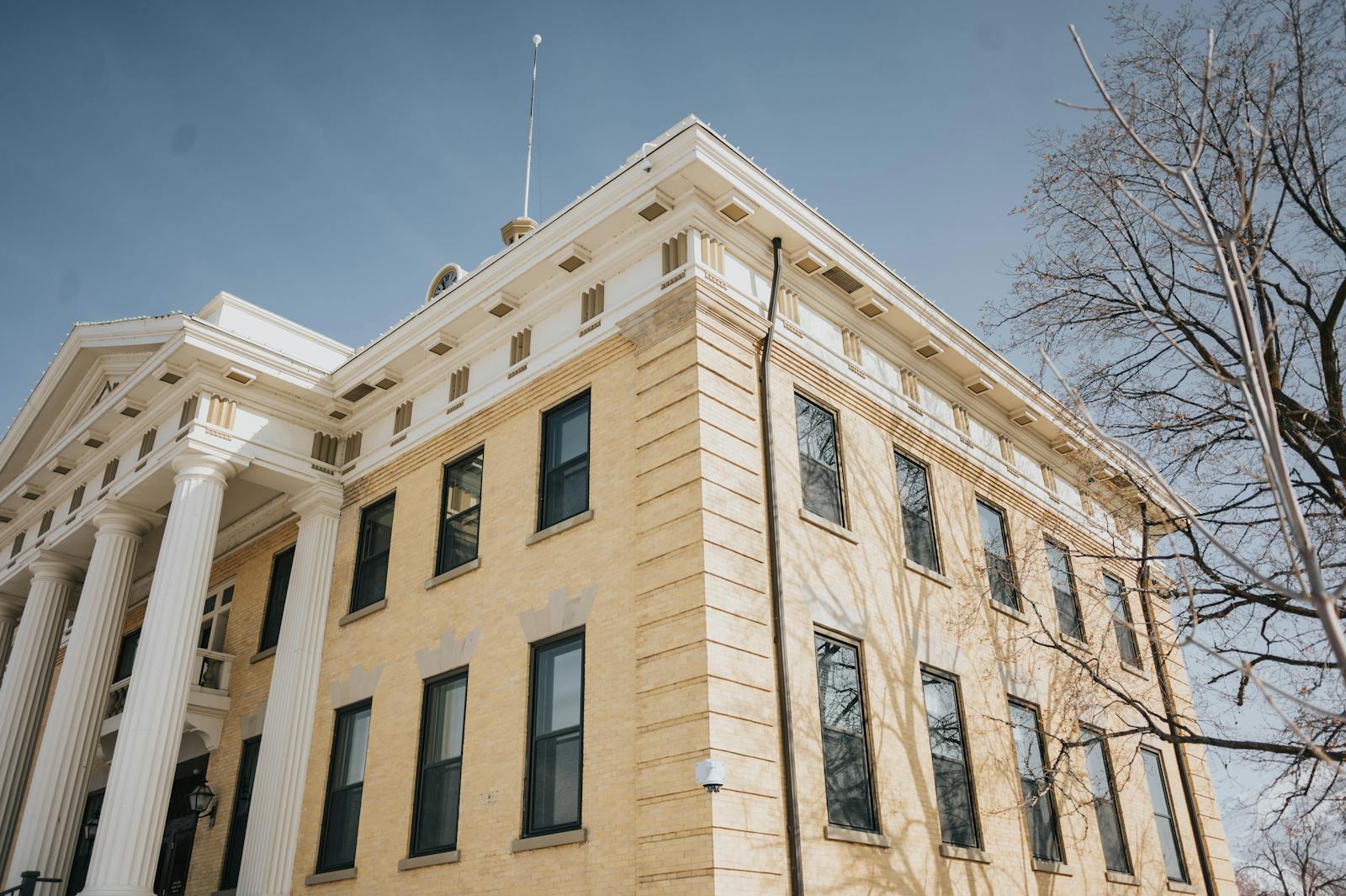
The Indiana Statehouse. The Indianapolis City-County Building. The Marion County courthouse complex, Hamilton County Government Center, Hendricks County Government Center, Johnson County Courthouse on the Franklin square. County administration buildings, township government offices, public-works facilities, and water/wastewater operations. These are high-traffic public spaces, often in buildings that are 50 to 130 years old, held to a completely different documentation standard than private-sector commercial — because every service record can be pulled as a public record, and because a pesticide application in a public lobby can become a city council agenda item if it's handled wrong.
ProTech runs pest programs for municipal and county facilities across the Indianapolis metro. Courthouse buildings with archived document storage going back a century. Public-works facilities with loading docks, fleet maintenance bays, and salt-and-sand barns. Historic county-seat buildings with bat colonies in attic spaces that require Indiana DNR-coordinated exclusion. Pigeon populations roosting on stone cornices of downtown buildings. City-hall complexes with food service in-house. Each facility carries regulatory scrutiny and public-accountability expectations that go beyond what a private office building ever faces.
We're a small, commercial-focused, owner-operated team — which works well for government procurement. Clean licensing and insurance documentation, RFP-compatible proposal format, public-records-grade service reporting, and a single point of contact who knows your facility rather than a rotating roster of regional reps. Our service records are built to survive a public-records request, an auditor review, or a council committee hearing — because in government work, they frequently have to.
Every municipal and public-sector facility format across the Indianapolis metro.
Courthouses, city-county admin buildings, public works, historic government buildings, fleet and maintenance facilities, and specialty public-sector operations.
Marion County courthouse complex, Hamilton County Government Center, Johnson County courthouse on the Franklin square, Hendricks County Government Center, Madison County courthouse, Boone County courthouse. High public traffic, secure document storage, and courtroom spaces requiring discretion-first service.
Indianapolis City-County Building, suburban city halls (Carmel, Fishers, Noblesville, Greenwood, Westfield, Zionsville, Brownsburg), and town halls across the metro. Mixed-use: public-facing lobbies, secure offices, council chambers, records divisions.
Indiana Statehouse, historic county-seat buildings, landmark township halls. Preservation-sensitive service, bat and bird exclusion coordinated with historic-preservation and DNR requirements.
Street/road departments, fleet maintenance garages, salt and sand barns, sign shops, vehicle storage yards. Rodent programs, loading-dock exclusion, and stored-product monitoring in parts/supplies storage.
Municipal water treatment plants, wastewater lift stations, and water-utility admin buildings. Specialty pest pressure around water-handling infrastructure, chemical storage, and below-grade operations.
Parks department admin, community centers, recreation centers, park-shelter complexes, and pool/aquatic-center facilities. Stinging-insect programs for outdoor event space, rodent programs for concession operations.
Indianapolis Public Library branches, county library systems, and township library facilities. Book-storage pest monitoring (silverfish, booklice, carpet beetle), meeting-room and lobby programs.
IndyGo facilities, transit maintenance garages, and municipally-operated airport-adjacent buildings. Commercial-fleet pest pressure with municipal procurement and documentation requirements.
If it's a city, county, township, or special-district facility in the Indianapolis metro — animal shelters, coroner facilities, emergency-operations centers, jail-adjacent admin, voter-registration offices, health department clinics — we build pest programs for it. Tell us what facility you operate and what your procurement process looks like.
Every pest service an Indianapolis-metro government building actually needs.
Low-toxicity, public-space-appropriate programs with documentation built to survive public-records requests, auditor review, and council committee scrutiny.
Commercial Bed Bug Treatment with Aprehend®
Government facilities encounter bed bugs in high-public-traffic ways private offices don't — public lobbies, court waiting areas, benefits-office seating, public-library upholstered chairs, shelter and social-service facilities, and jail-adjacent admin where intake happens. Bed bug reports in a government building become public-records matters fast. ProTech is one of a short list of Indy-metro operators professionally trained in Aprehend® — an EPA-registered biopesticide that addresses bed bug activity discreetly, without a multi-day shutdown, public-space closure, or the media visibility of heat-treatment trucks parked at a courthouse.
- ✓No public-space closure required
- ✓Kills adults & nymphs
- ✓Up to 3 months residual
- ✓Discreet — no heat-treatment visibility
Low-toxicity gel baiting in food-service areas, break rooms, and janitorial spaces. Never broadcast in public lobbies or courtrooms.
View service →Cluster-fly management in historic-building attics, cafeteria/cafe fly programs, drain-fly diagnostics in public restroom drain lines, and exterior fly pressure around dumpster corrals.
View service →Document/archive storage monitoring, tamper-resistant exterior bait stations, loading-dock exclusion for public works, and interior snap-trap monitoring in mechanical spaces.
View service →Low-toxicity, threshold-based, prevention-first programs appropriate for public spaces, historic buildings, and facilities with vulnerable-population traffic.
View service →Odorous house ant, carpenter ant, and pavement ant pressure — non-repellent bait placement in service areas, never broadcast in public-facing lobbies or workspace.
View service →Archive and document-storage pest monitoring (silverfish, booklice, carpet beetle, rodent-adjacent stored-product pests), library collection monitoring, and supply-storage programs.
View service →Historic-building envelope exclusion assessment, exterior cornice and roofline bird-pressure surveys, bat-access-point identification (DNR-coordinated), and pre-season walkthroughs.
View service →Active pest activity in a public-facing lobby, courtroom, or council-chamber space. Priority dispatch with documentation suitable for public-records disclosure.
View service →Recurring monthly or quarterly monitoring with public-records-grade documentation, RFP-compatible reporting format, and consolidated multi-facility rollups for county-level portfolios.
View service →What Indianapolis-metro public-sector facilities actually face.
Regional pest patterns across courthouses, city-county admin, public works, historic buildings, and specialty municipal operations — what we see on service calls, by pressure type and source.
The #1 government-building pest complaint. The Indiana Statehouse, historic county courthouses, and older city halls with original single-pane windows see heavy overwintering-pest accumulation September-November and warm-day emergence February-March. Dead flies on courtroom windowsills and stink bugs crawling marble lobby walls are visible public-perception issues. Late-August exterior perimeter exclusion is the prevention play.
Long-term document storage in courthouse basements and county records facilities draws commensal rodents — mice especially. Paper-based records are both shelter material and, with enough time, substrate for chewing activity that damages irreplaceable public records. Tamper-resistant locked stations, interior snap-trap monitoring, and exclusion at foundation and utility-penetration points are non-negotiable.
Pigeon roosting on the stone cornices of downtown Indianapolis government buildings, historic courthouses, and the Statehouse is a highly visible aesthetic problem (droppings on sidewalks, columns, and entry steps) and a structural one (uric acid corrosion of limestone and sandstone). Bird netting, spikes, ledge modification, and ectoparasite treatment — coordinated with historic-preservation requirements.
Indiana bats, big brown bats, and little brown bats colonize historic government-building attic spaces — the Statehouse, county courthouses, historic township halls. These are Indiana protected species. Exclusion requires Indiana Department of Natural Resources consultation and timing outside maternity season (May-July). Guano accumulation creates histoplasmosis exposure risk for facility staff that requires proper PPE and protocol.
Public-works facilities have commercial-grade rodent pressure — open bays, loading docks, parts storage, break rooms with food activity, and adjacent salt/sand storage that provides nesting substrate. Exterior tamper-resistant stations, loading-dock gap exclusion, and interior monitoring around equipment storage resolve long-standing pressure.
Odorous house ants surge April-May around break-room coffee stations and trash. Carpenter ants are a structural concern in older buildings with moisture-compromised framing — relevant in historic courthouses where roof or parapet leaks have created moisture-damaged wood.
High-humidity basement archives and document storage draw silverfish, booklice, and psocids — all of which feed on paper, binding glue, and cellulose starch. Humidity control and sticky-card monitoring are the IPM-compliant approach; chemical treatment in an archive is almost never the right call.
Wasps and yellowjackets in high-public-traffic entries — courthouse steps, city-hall plazas, parks-department event spaces — are a public-safety issue. Late-summer activity spikes especially around outdoor public events, ceremonies, and high-visitor-count days. Priority-response treatment with low-toxicity products in public-space settings.
Government-building pest pressure in the Indianapolis metro follows the building stock — historic facilities have heavy overwintering and bat/bird pressure, modern admin buildings have cafeteria and office-ant pressure, public works has year-round rodent pressure. We schedule frequency around your operation (courthouse term calendar, public-meeting schedule, fleet-operations cycle) and document each visit to public-records-grade standards.
Documentation built for public accountability.
Every service record we produce is written assuming it could be pulled on a public-records request, referenced in a council committee, or attached to an audit response. Because in government work, it often is.
Indiana Pesticide Law (OISC)
Every technician is Office of Indiana State Chemist licensed and certified. Service records match commercial-facility documentation standards and stand up to public-records disclosure, state-inspector review, and any complaint-response process the OISC may run.
Public-Records-Grade Documentation
Indiana Access to Public Records Act (APRA) makes government pest-control records subject to public disclosure. Every service is digitally archived with timestamp, technician, product applied, site detail, and corrective-action note — formatted for clean disclosure without redaction complications or embarrassing gaps.
RFP & Purchasing Compliance
We produce RFP-format proposals, insurance certificates, W-9 and vendor-registration documentation, and pricing schedules suitable for city, county, and township purchasing processes. Multi-year contract compatibility with standard government payment terms and renewal structures.
Indiana DNR Protected Species
Bat and bird exclusion in historic government buildings requires coordination with Indiana Department of Natural Resources — protected species, maternity-season timing, and species-appropriate exclusion technique. We handle the DNR consultation, documentation, and compliant execution so the facility doesn't carry the regulatory exposure.
Historic Preservation Coordination
Indiana Statehouse, county-seat historic courthouses, and landmark-designated township buildings often carry state or federal historic-preservation status. Exterior treatment choice, exclusion material selection, and bird-netting visibility are coordinated with preservation requirements rather than creating a secondary preservation compliance problem.
Liability & Risk Management
Pest control records are also evidence for your risk-management and insurance carriers if a pest-related public incident (stinging-insect, bat exposure, rodent sighting in a public lobby) is ever reported or litigated. Every service is timestamped, itemized, and digitally archived — ready for risk-pool audit, council committee review, or legal discovery.
How we protect your government facility.
Facility & Risk Assessment
We walk the full facility — public-facing lobbies, courtrooms, council chambers, offices, archive and records storage, mechanical spaces, exterior cornices and rooflines, attic access, and fleet/public-works areas where applicable. Map conducive conditions, existing pressure, and public-accountability exposure points.
Custom Service Plan & Proposal
Treatment selection, service frequency, documentation format, and RFP-compatible proposal built around your facility type, procurement process, public-records expectations, and preservation requirements.
Low-Toxicity Targeted Treatment
IPM-compliant products placed in crack-and-crevice harborage and locked service areas. Never broadcast in public lobbies, courtrooms, or council chambers during operating hours. Historic-building and DNR-protected-species work scheduled in compliance windows.
Public-Records-Grade Reporting
Digital service logs, trend tracking, public-records-disclosure-ready reports, and multi-facility rollups for county-wide or city-wide portfolios. Ready for council committee, auditor review, or APRA response on request.
Government facility pest control across the Indianapolis metro.
We service city, county, township, and special-district facilities across Marion, Hamilton, Hendricks, Johnson, Boone, Hancock, Madison, Shelby, and Morgan counties.
- Indianapolis pest control→
- Pest control in Carmel→
- Fishers→
- Noblesville pest control→
- Pest control in Greenwood→
- Westfield, IN→
- Zionsville, IN→
- Brownsburg, IN→
- Pest control in Avon→
- Pest control in Plainfield→
- Franklin pest control→
- Lawrence pest control→
- Pest control in Speedway→
- Beech Grove→
- Greenfield pest control→
- Mooresville pest control→
- Shelbyville pest control→
- Anderson→
- Pest control in Whitestown→
- Lebanon pest control→
- Marion County
- Hamilton County
- Hendricks County
- Johnson County
- Boone County
- Hancock County
- Madison County
- Shelby County
- Morgan County
Government facility pest questions.
Can you participate in our municipal or county RFP process? +
How do you handle pest control in a courthouse or council chamber where public traffic is constant? +
Our archive has had a rodent problem for years — what's the fix? +
We have bats in our historic courthouse attic — what's the process? +
Our service records will be subject to public-records requests — how do you handle that? +
Can you handle pigeon and bird issues on historic building exteriors? +
We have multiple facilities across the county — can you service the whole portfolio? +
Talk to a commercial government facility pest specialist.
Tell us your facility, procurement process, and current pressure — we'll scope a plan, an RFP-compatible proposal, and a realistic timeline. No high-pressure sales, no call center, no forced contract.
- ✓Free on-site facility walkthrough
- ✓RFP-compatible proposal format — licensed and insured
- ✓DNR-compliant protected-species experience
- ✓Public-records-grade documentation on every visit